

Optimization Theory · Field Notes
Searchaeology
A field guide to the history of search engines, 1990 to 2026. Forty-eight real screenshots. Zero ten-blue-links left unturned.
About 36 years of results (0.08 seconds)
Prefer the picture? See the whole history as one infographicAll six eras on one very long results page. Tap to unroll.

Every SEO eventually has the moment. You search for something simple, and above the first organic listing there's an AI answer, four ads, a map, a carousel, two Reddit threads and a box of questions that other people also asked. And you think, quietly, it didn't used to be like this.
It didn't. This is the history of search engines from 1990 to 2026, told the only honest way: with 48 real screenshots of what search actually looked like, era by era, plus the updates that ruined people's weekends, the tactics that died along the way, and one butler.
If you got into SEO after 2015, think of this as a museum. If you got into SEO before 2005, think of it as a photo album. Either way, you may want to sit down. Your back hurts anyway.
Looking for your own search history? That lives at myactivity.google.com. This page is about a different, much longer history, and nobody can delete this one.
The history of search engines in six eras
Six eras, six colors. The colors follow the Google logo, one letter per era. Yes, someone checked. Pick an era, or scroll through all of it in order like a responsible adult.
- GEra 01 · 1990 to 1997The Wild IndexGray pages, blue links, a directory run by two grad students, and a butler.
- oEra 02 · 1998 to 2004The PageRank EraA link becomes a vote. Everyone starts printing ballots.
- oEra 03 · 2005 to 2010The Universal EraImages, news, video and maps move into the ten blue links. Permanently.
- gEra 04 · 2011 to 2016The Quality WarsPanda, Penguin, Hummingbird and a keyword report that says nothing.
- lEra 05 · 2017 to 2022The Machine Learning EraGoogle stops matching your words and starts guessing what you meant.
- eEra 06 · 2023 to 2026The Answer EngineThe results page answers the question. The click becomes optional.
Search engine history, by the numbers
Some context before the screenshots. The numbers got a lot bigger. Your share of them did not.
Google searches per day, 1998 to 2025
Same scale for every bar. Hover a bar for where the number comes from.
Era 01 · 1990 to 1997
The Wild IndexThe first search engines
The first search engines didn't search the web, mostly because there wasn't much web to search. Archie, released in 1990 by Alan Emtage at McGill University, indexed FTP file listings. You had to know the file name. If you knew the file name, you arguably didn't need a search engine. Nobody brought this up at the time, out of politeness.
By the mid-90s the web had pages, and pages needed finding. Crawlers showed up (JumpStation, WebCrawler, Lycos). Directories showed up (Yahoo, which started life as Jerry and David's Guide to the World Wide Web). AltaVista showed up with the biggest index anyone had seen. Every page was gray, every link was blue and underlined, and nobody had yet used the word "algorithm" in a sentence that ended in tears.
The era in 5 colors
- Link blue
#0000EE - Visited purple
#551A8B - Netscape gray
#C0C0C0 - Plain white
#FFFFFF - Times New Roman
#000000
- 1990
Archie indexes FTP file listings. The name is "archive" without the v. Gopher search tools Veronica and Jughead were later named to match, because the 90s were like that.
- 1993
JumpStation becomes the first tool to crawl, index and search in one place. It only read titles and headings. Some people still optimize like that's all Google reads.
- 1994
WebCrawler launches the first full-text index. Lycos launches at Carnegie Mellon. Jerry and David's Guide gets renamed Yahoo.
- 1995
Excite launches in October. AltaVista launches on December 15 from Digital Equipment Corp.
- 1996
Larry Page and Sergey Brin build BackRub at Stanford. Danny Sullivan publishes A Webmaster's Guide to Search Engines, which grows into Search Engine Watch and, eventually, an entire profession of people refreshing rankings.
- 1997
Ask Jeeves invites you to ask a question in plain English. Yandex launches in Russia.
Search results for: history of search engines
87% Optimization Theory Home Page
Welcome to my home page!! This page is about search engines. Search engines search engines search engines. history of search engines history of search engines history of search engines
http://www.optimizationtheory.com/~jourdan/index.html
You are visitor number 000427
Best viewed in Netscape Navigator 3.0 at 800 by 600
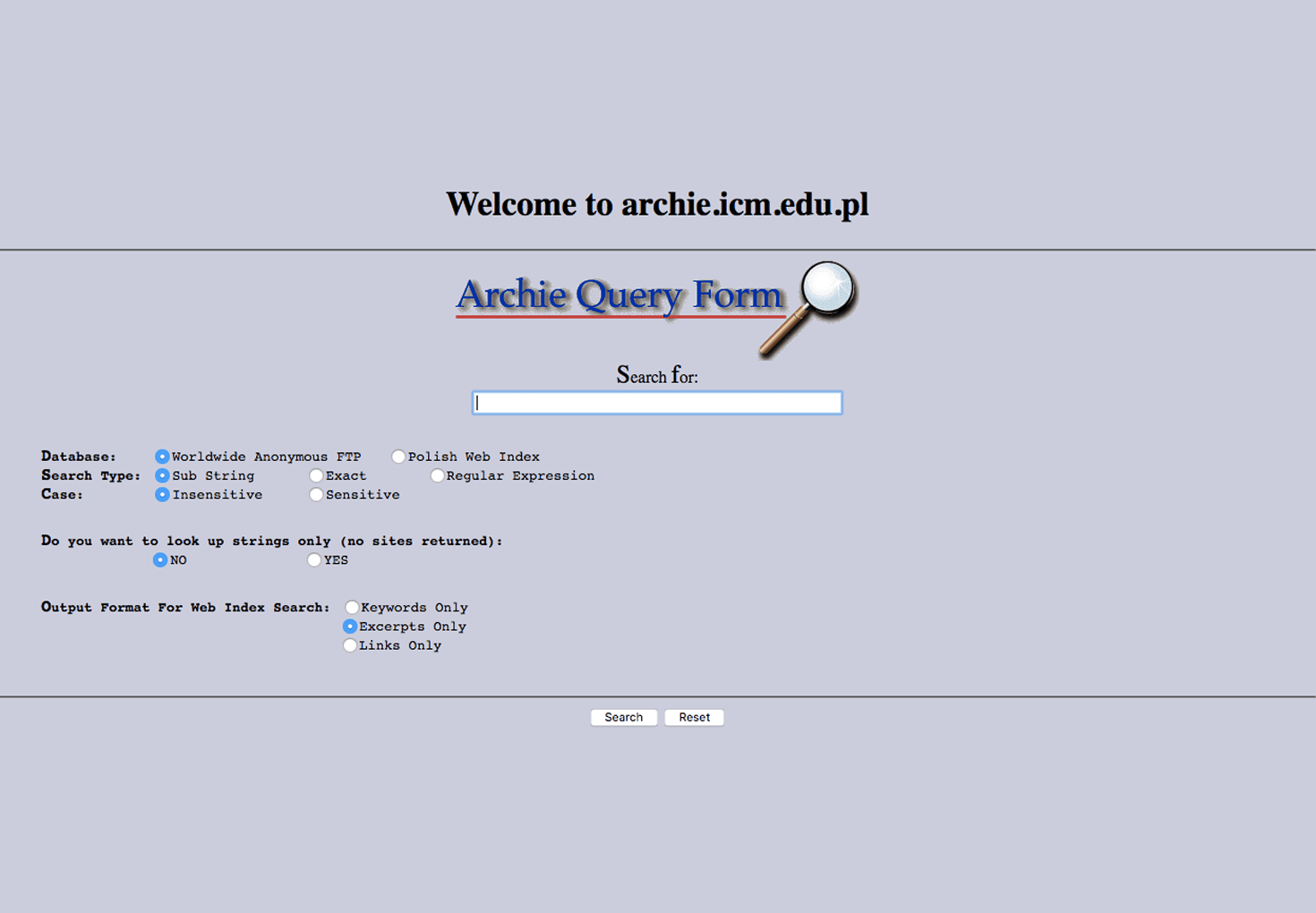
Archie query form
1990
Archie in 1990 was plain text over telnet. This web form is a later gateway at the University of Warsaw that was still answering queries in 2020, which makes it more dependable than most link outreach.
Spot the details
- Lavender-gray page with monospace Courier labels
- Radio buttons for Sub String, Exact and Regular Expression. Regex, as a consumer feature. Bold.
- No ads, no snippets, no "People also ask." Just you and a file name.
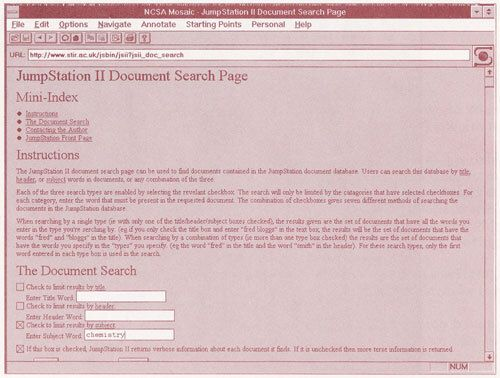
JumpStation II
1993 to 1994
Running inside NCSA Mosaic, the browser most people used at the time. It was built by a student at the University of Stirling, which is how most of the internet's important things got built: by someone who was supposed to be doing something else.
Spot the details
- Gray Mosaic window chrome with a URL bar
- A serif heading: "JumpStation II Document Search Page"
- Checkboxes to search by title, header or subject
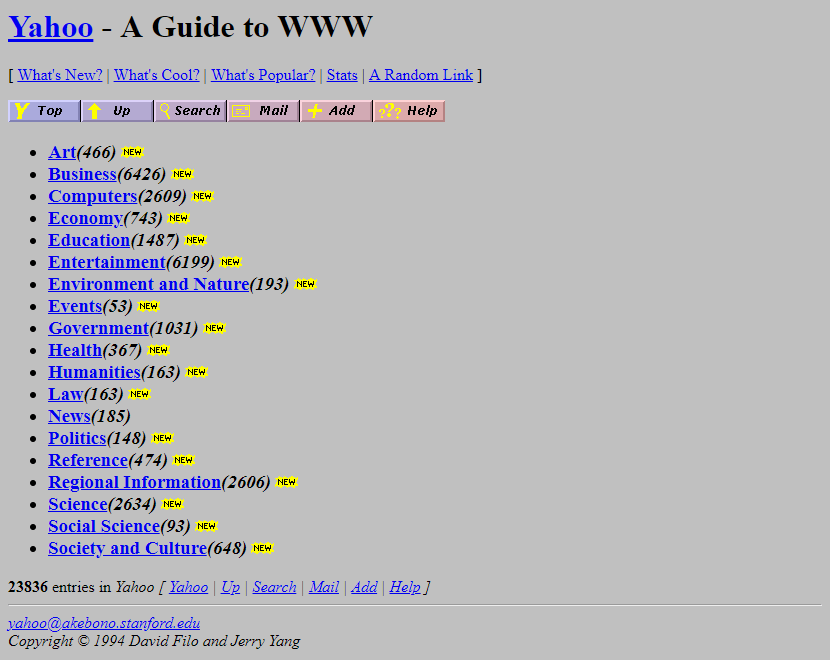
Yahoo: A Guide to WWW
Late 1994
This is Jerry and David's Guide right after it became Yahoo. A human being looked at websites and put them in categories. A human being. Looked at websites. On purpose.
Spot the details
- Solid #C0C0C0 gray background
- Bold blue underlined categories with counts, like Business (6426)
- Little yellow NEW badges, the 1994 version of a push notification
- Footer: "23836 entries in Yahoo." That was most of the web.
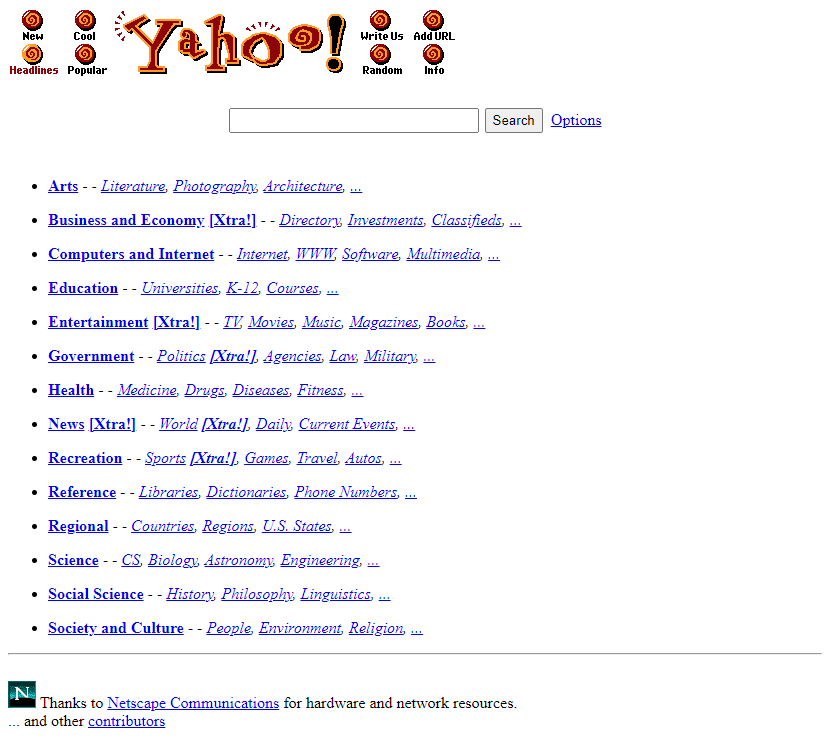
Yahoo!
1995
The first version with the red and yellow logo. Note the Add URL button. You submitted your own site, then you waited. Some people are still waiting.
Spot the details
- Swirl icon buttons: New, Cool, Headlines, Popular, Write Us, Add URL, Random, Info
- A search box with a gray Search button and an Options link
- Categories like "Arts -- Literature, Photography" with [Xtra!] tags
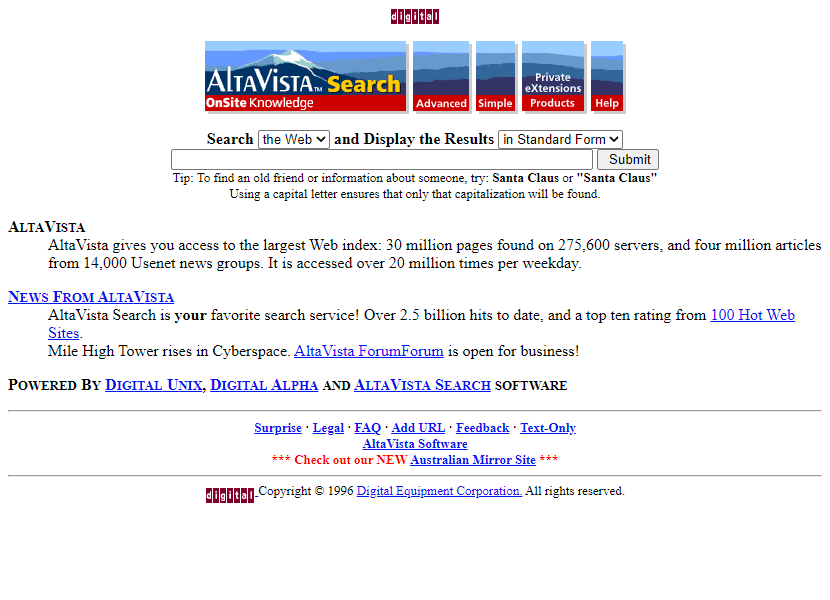
AltaVista
1996
AltaVista had the biggest index of the mid-90s and a lot of us learned what a search engine could do right here. It was later sold to Overture for $140 million, folded into Yahoo, and shut down on July 8, 2013. AltaVista learned what an acquisition could do.
Spot the details
- A purple "digital" logo above a blue mountain banner
- "Search [the Web] and Display the Results [in Standard Form]." Options, in 1996.
- The brag line: "30 million pages found on 275,600 servers"
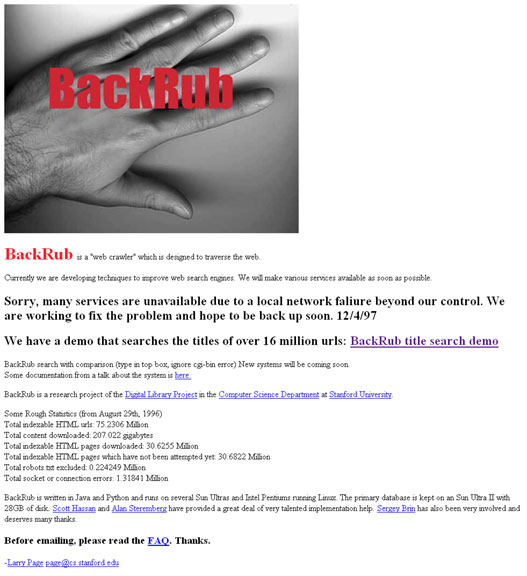
BackRub
1996 to 1997
Before Google was Google, it was BackRub, a Stanford project that ranked pages by the links pointing at them. The logo is a black-and-white photo of a hand. Nobody in this industry is in a position to criticize anyone's early branding.
Spot the details
- A black-and-white photo of a hand with "BackRub" in red
- Plain text stats: "Total indexable HTML urls: 75.2306 Million"
- The entire link economy, in its larval stage
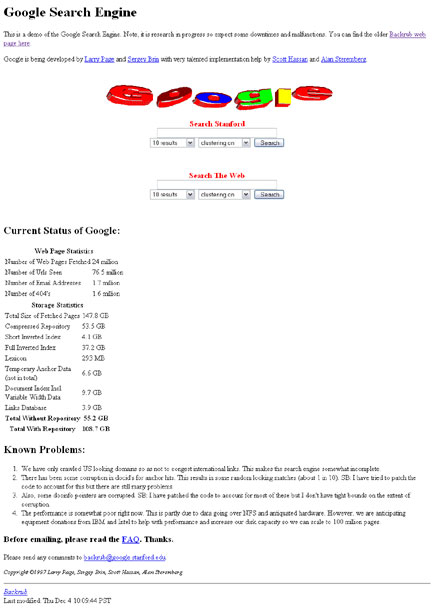
Google alpha
1997
The 3D wordmark years. Google at Stanford, offering to search Stanford or the web, with a dropdown for something called clustering. It looks like a clip art accident. It became one of the most valuable companies in history. Show this to your designer. Or don't.
Spot the details
- A chunky 3D red, blue, green and yellow logo
- Red labels: "Search Stanford" and "Search The Web"
- Dropdowns for "10 results" and "clustering on"
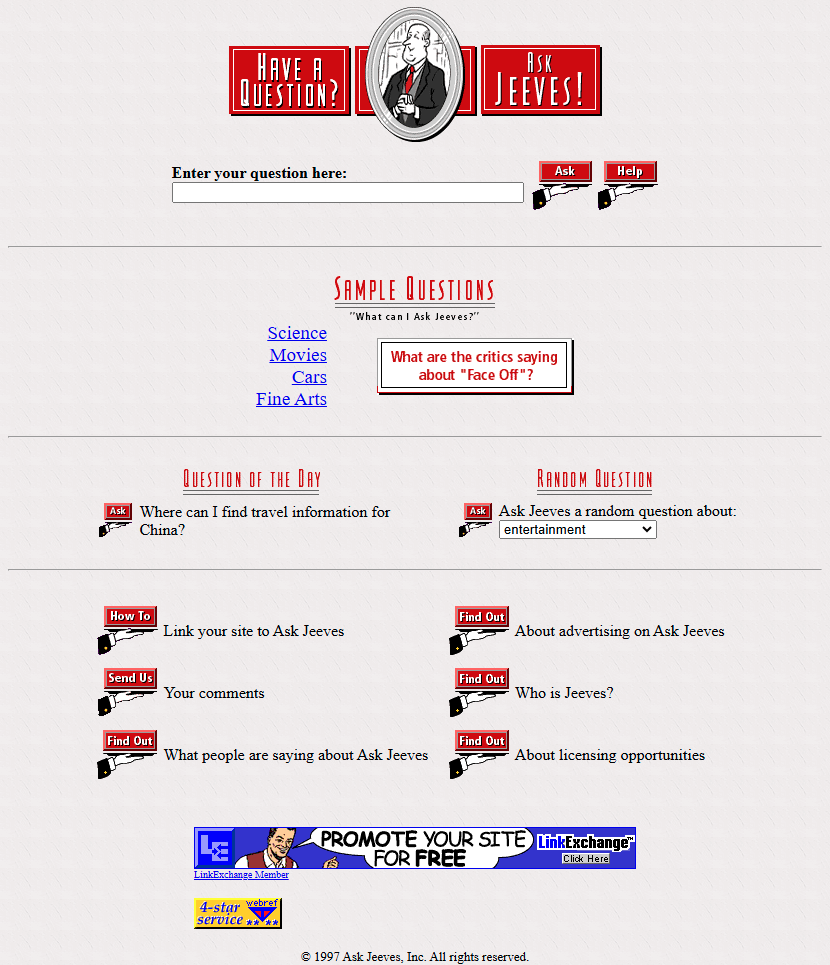
Ask Jeeves
1997
The butler, in his original form. Ask Jeeves let you type a question in plain English, about 25 years before anyone called that conversational search. He was retired in 2006, which is more of a send-off than most affiliate sites got in 2003.
Spot the details
- A butler illustration in an oval cameo frame
- Red condensed headlines: "HAVE A QUESTION?" "ASK JEEVES!"
- A beige textured background and "Enter your question here:"
- Red Ask buttons with a white-gloved pointing hand
Era 02 · 1998 to 2004
The PageRank EraGoogle arrives
In September 1998, Google incorporated, and the idea that a link is a vote became the most profitable idea in the history of marketing. Also the most abused. Within a few years, people were buying votes, trading votes, and building entire websites whose only job was to vote.
This is the era of the little green PageRank bar, the Google Dance, and the first ads. It's also the era when Excite was offered the whole company for $750,000 and said no. We all make mistakes. Most of ours are smaller.
The era in 5 colors
- Results bar
#3366CC - Title link
#0000CC - URL green
#008000 - Ad cream
#FAF6E1 - Ad blue
#DFF2FD
- 1998
Google incorporates in September. GoTo.com pioneers pay-per-click, the business model that would eventually pay for everything. MSN Search and DMOZ launch.
- 1999
Google's founders offer the company to Excite for $1 million, then $750,000. Excite passes, then merges with @Home in a $6.7 billion deal. @Home goes bankrupt in 2001. Timing is everything.
- 2000
Baidu launches in January. Yahoo starts using Google's results in June. AdWords launches in October with 350 advertisers.
- 2003
Yahoo buys Inktomi ($235 million) and Overture ($1.63 billion). In November, the Florida update wipes out a lot of affiliate sites right before the holidays. Google learns it can do this. It has not stopped.
- 2004
Yahoo drops Google's results in February. Google goes public at $85 a share in August. Google Suggest shows up in Labs in December.
Guaranteed Top 10 Rankings! Only $19.95. Act Now.
www.rankings-guaranteed.biz
Optimization Theory - History of Search Engines
... A complete history of search engines, from Archie and AltaVista to Google. Updated daily. Probably. ...
www.optimizationtheory.com/history/ - 9k - Cached - Similar pages
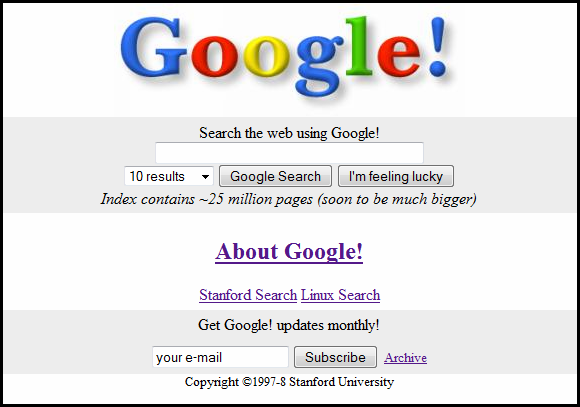
Google! beta
Nov 1998
google.stanford.edu, back when the logo had an exclamation point like a Yahoo cover band, and the index held about 25 million pages, "soon to be much bigger." Understatement of the century, and the century had just started.
Spot the details
- A "Google!" logo with a drop shadow
- "Search the web using Google!" on a light gray band
- A "10 results" dropdown with "Google Search" and "I'm feeling lucky"
- "Index contains ~25 million pages (soon to be much bigger)"
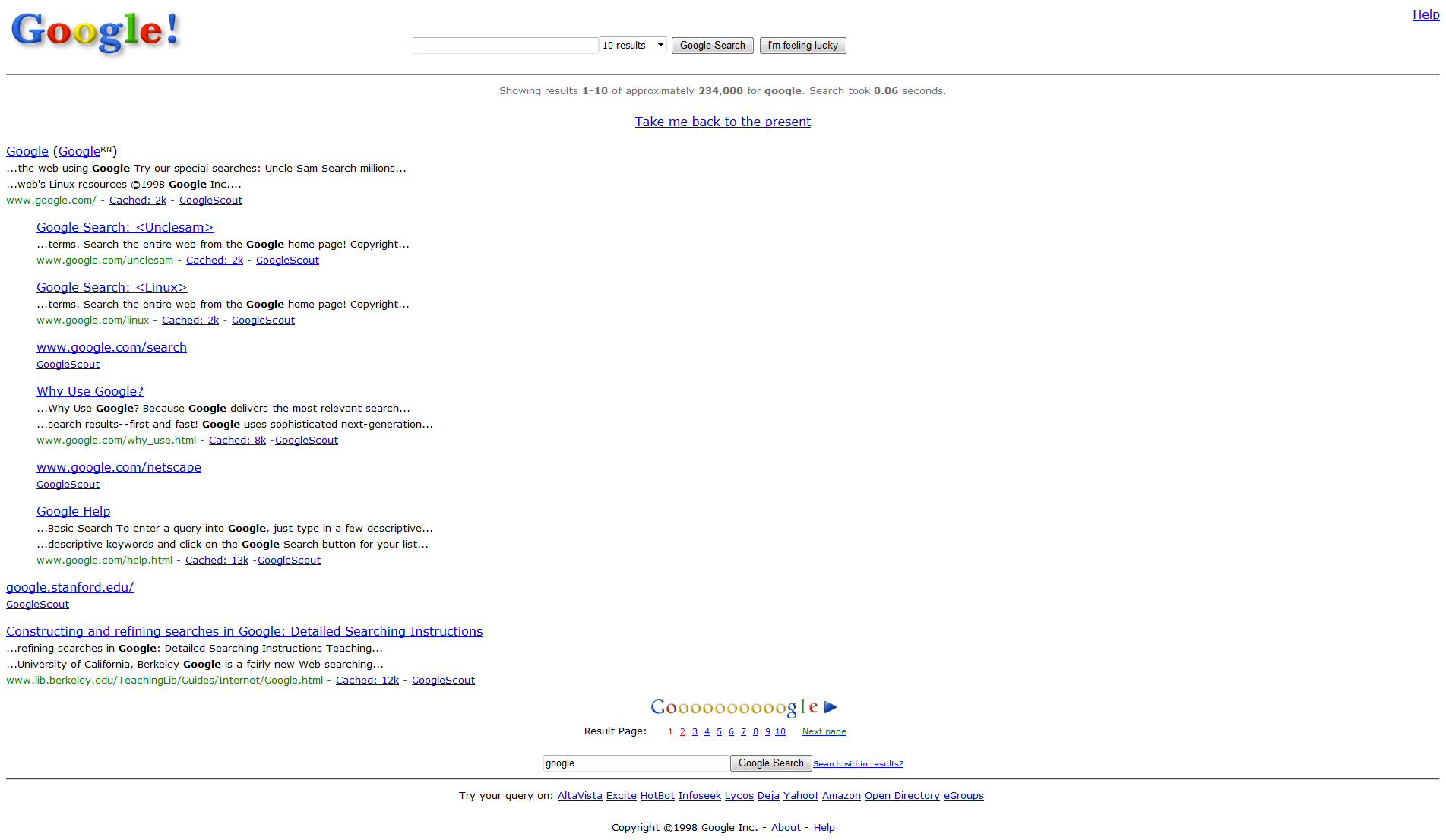
What Google looked like in 1998
1998 layout
If you've ever wondered what Google looked like in 1998, this is it. See the "Take me back to the present" link? Google built this throwback for its 15th birthday in 2013 as an easter egg for the search "Google in 1998," but the layout matches the period. Even Google gets nostalgic. It just has more servers to do it on.
Spot the details
- "Showing results 1-10 of approximately 234,000 for google. Search took 0.06 seconds."
- An indented second result from the same site. Host clustering, before it had a name.
- A green URL with "Cached: 2k - GoogleScout"
- "Goooooooooogle" pagination, then "Try your query on: AltaVista Excite HotBot Infoseek Lycos." Google linked to its competitors. Different times.
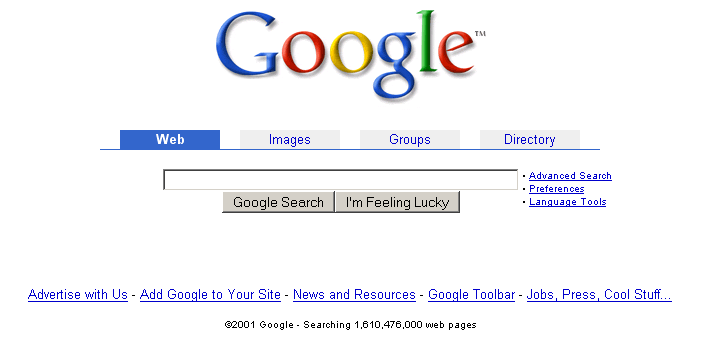
Google homepage with tabs
2001
Tabs arrive: Web, Images, Groups, Directory. The footer bragged about searching 1,610,476,000 web pages, a number Google eventually stopped printing on the homepage, presumably because it was getting awkward for everyone else.
Spot the details
- The selected tab in solid blue with white text
- Gray "Google Search" and "I'm Feeling Lucky" buttons
- "©2001 Google - Searching 1,610,476,000 web pages"
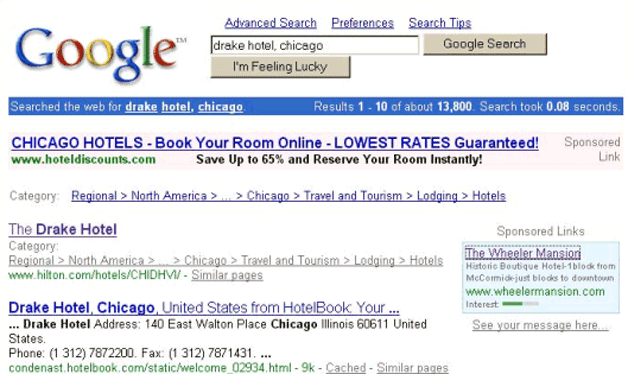
The first AdWords ads
2000
AdWords launched in October 2000 with 350 advertisers. One shaded ad up top, a polite box on the right with a little green Interest meter, and a line inviting you to "See your message here." The message has since been seen. Above the fold. Several times.
Spot the details
- A blue results bar across the full width
- One shaded top ad with a gray "Sponsored Link" label
- "Category: Regional > North America > ... > Hotels" pulled from the directory
- A right-rail "Sponsored Links" box with an "Interest:" bar
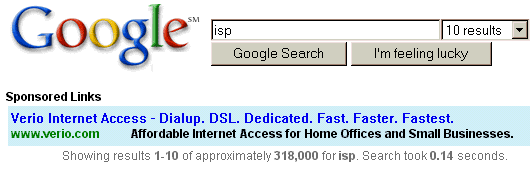
Sponsored Links header
2000
An alternate early ad treatment, with "Sponsored Links" in bold above a light blue band. Ads were clearly labeled and visibly different from organic results. Enjoy this one. It doesn't last.
Spot the details
- A bold "Sponsored Links" heading above a light blue band
- A tiny "SM" mark next to the logo
- "Showing results 1-10 of approximately 318,000 for isp."
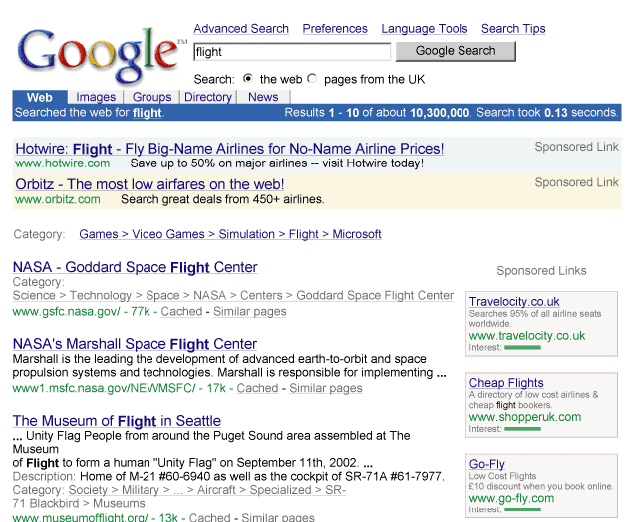
Google SERP with AdWords
2002
Peak early-2000s Google and the best single picture of the era. Two pastel ads up top, ad boxes down the right side, and ten organic results that people clicked. Regularly. On purpose.
Spot the details
- Tabs: Web, Images, Groups, Directory, News
- "Search: (•) the web ( ) pages from the UK"
- Two shaded top ads in two different pastels
- Right-rail ad boxes with green Interest meters
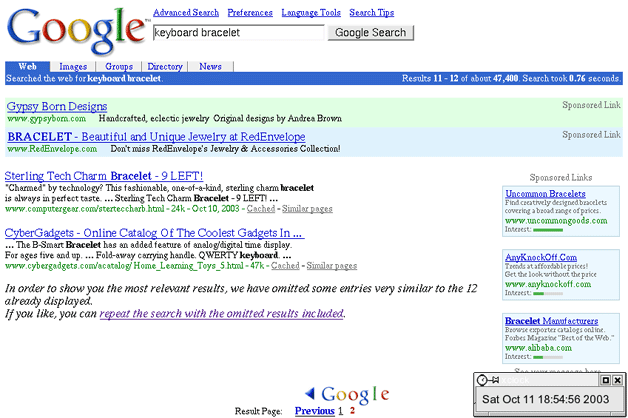
Page two, October 2003
Oct 2003
A page-two results page from October 2003, a month before the Florida update. People still went to page two in 2003. Some of them even came back.
Spot the details
- Italic: "In order to show you the most relevant results, we have omitted some entries very similar to the 12 already displayed."
- "Result Page: Previous 1 2" under a small Google logo with a blue arrow
- Times New Roman, because the browser default won that day
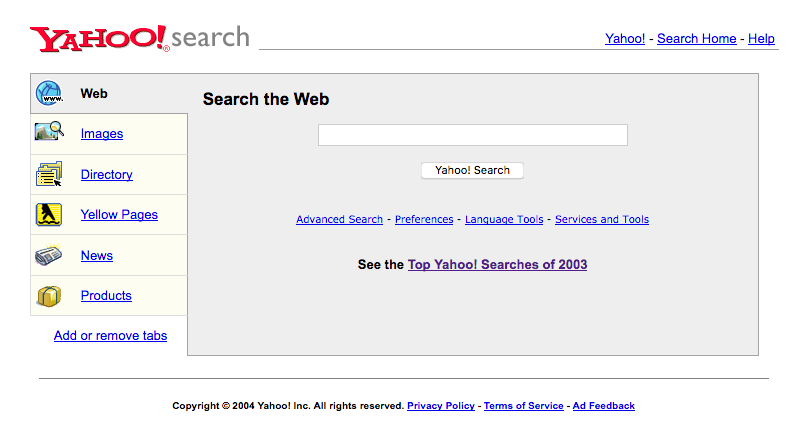
Yahoo! Search
2004
In February 2004, Yahoo stopped using Google's results and launched its own engine, built on Inktomi and Overture, which together cost $1.865 billion. This is the moment Yahoo decided to compete with Google head-on. You know how it went. Yahoo knows too.
Spot the details
- A "YAHOO! search" logo
- Left tabs with icons: Web, Images, Directory, Yellow Pages, News, Products
- A gray panel, a "Yahoo! Search" button and "See the Top Yahoo! Searches of 2003"
Era 03 · 2005 to 2010
The Universal EraResults get crowded
By the mid-2000s, the ten blue links had a problem: the internet wasn't only text anymore. So in May 2007, Google launched Universal Search and started blending images, news, video, maps and local results right into the main results page. The ten blue links didn't disappear. They just started sharing the page, and they've been sharing it with more and more things ever since.
Meanwhile, nofollow arrived to fight blog comment spam, which it did, in the sense that people kept spamming blog comments. Ask Jeeves retired the butler. Microsoft renamed its search engine for the third time and landed on Bing. And Google started showing results while you typed, because waiting for you to press Enter had become an unacceptable delay.
The era in 4 colors
- Web band
#E5ECF9 - 2007 titles
#0000CC - 2010 titles
#1111CC - 2010 URL
#228822
- 2005
nofollow launches in January with Google, Yahoo and MSN on board. Google Sitemaps arrives in June. IAC buys Ask Jeeves for $1.85 billion.
- 2006
Ask Jeeves becomes Ask.com and the butler is retired. He handled it with dignity.
- 2007
Universal Search blends images, news, video and local results into one page.
- 2008
Cuil launches in July claiming the biggest index on the web, and shuts down in September 2010. DuckDuckGo launches in September and is still here.
- 2009
Microsoft launches Bing in June and signs a search deal with Yahoo in July. Wolfram|Alpha launches. Google confirms it ignores the meta keywords tag. Nobody tells the meta keywords tag.
- 2010
Caffeine rebuilds Google's index in June. Google Instant shows results as you type in September.
Image results for history of search engines
Optimization Theory: The History of Search Engines
From Archie to Universal Search, a complete history of search engines with screenshots of every era ...
www.optimizationtheory.com/history/ - 18k - May 15, 2007 - Cached - Similar pages - Note this
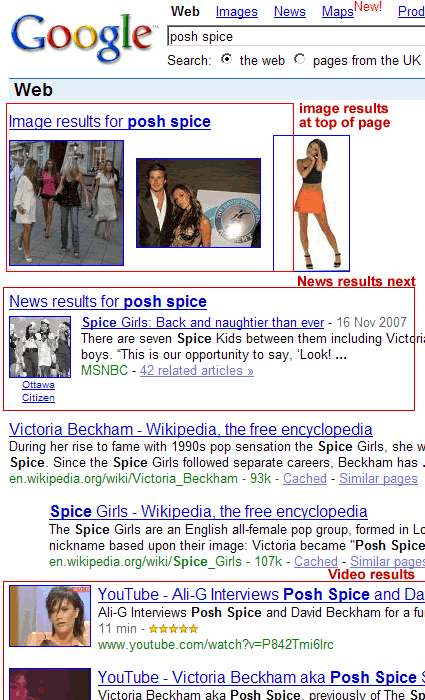
Universal Search: images + news
2007
How blended results looked at launch, with image and news rows sitting in the middle of the web results for a Posh Spice query. The red annotations are Version Museum's. The query is pure 2007.
Spot the details
- Tabs: Web, Images, News, Maps (with a red "New!"), Products
- "Image results for posh spice" with blue-bordered thumbnails
- "News results for posh spice" with a source and "42 related articles »"
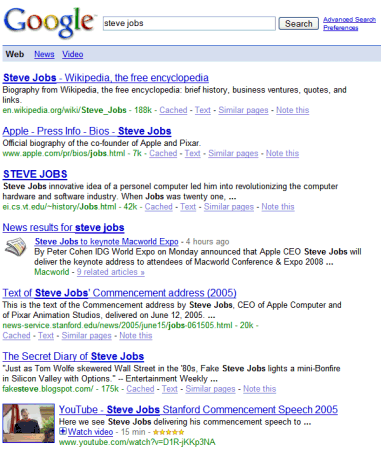
Universal Search: news row
2007
A news result with a little newspaper icon, mixed in with the regular web results. One of the first times an organic listing got pushed down by something that wasn't an ad. It was not the last.
Spot the details
- A Web, News, Video bar on light blue
- "- 188k - Cached - Text - Similar pages - Note this"
- Page size in kilobytes, in case you were on dial-up and had decisions to make
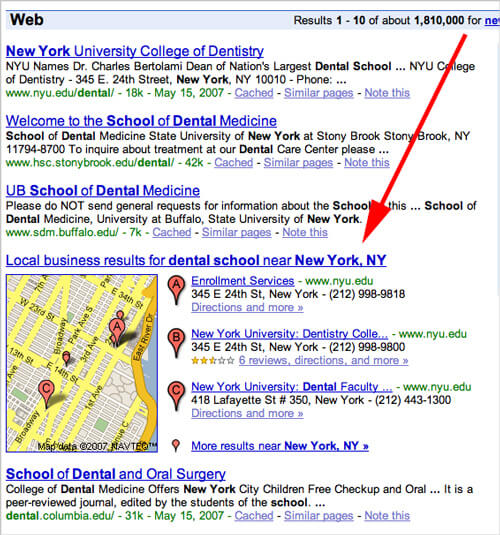
Universal Search: local map
May 2007
The local OneBox, replacing several web results with a map, red pins and star ratings. Local SEO as a job title starts about here. So does the phone call from a dentist asking why he isn't "on the map."
Spot the details
- "Local business results for dental school near New York, NY"
- A yellow street map with red A, B and C pins and "Map data ©2007 NAVTEQ"
- Star ratings and "Directions and more »"
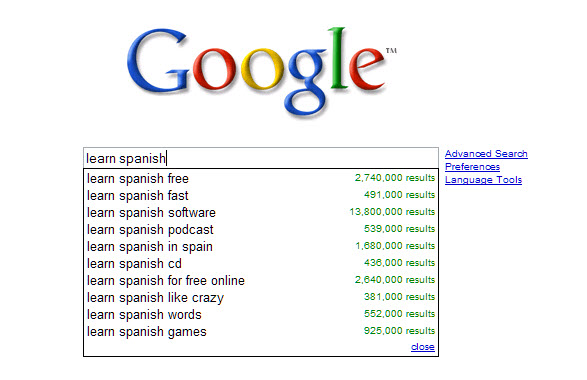
Google Suggest
2008
Autocomplete, with result counts in green next to each suggestion. Google was now finishing your sentences. It has gotten much more confident about it since.
Spot the details
- A boxed dropdown under the search field
- Result counts in green on the right
- A small "close" link at the bottom
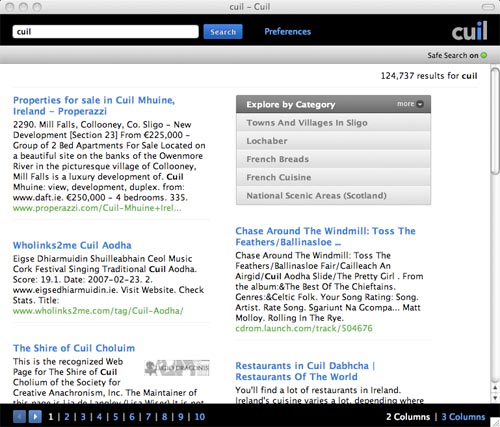
Cuil
July 2008
Cuil launched in July 2008 claiming the biggest index on the web, with magazine-style columns instead of a list. It shut down in September 2010. It was pronounced "cool." It was not, in the end, cool.
Spot the details
- A black header bar, blue Search button and the "cuil" logo at right
- "124,737 results for cuil"
- Two to three columns of results with teal titles
- A gray "Explore by Category" box
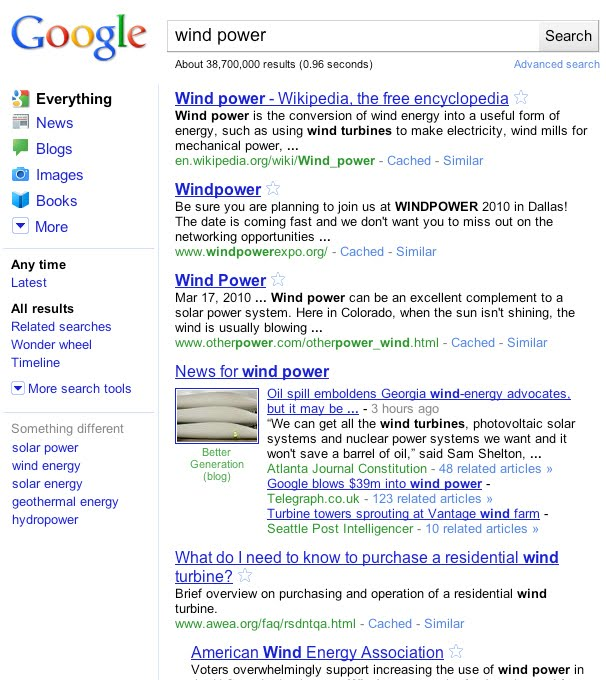
The Everything sidebar
May 2010
Google's own launch screenshot of the left-hand nav, with Everything at the top and the Wonder Wheel tucked underneath. If you remember the Wonder Wheel, you have been doing this for a while. Please stretch.
Spot the details
- Left nav: Everything, News, Blogs, Images, Books, More
- "Any time / Latest" and "All results / Related searches / Wonder wheel / Timeline"
- "About 38,700,000 results (0.96 seconds)"
- A star next to each title, plus "Cached - Similar" links
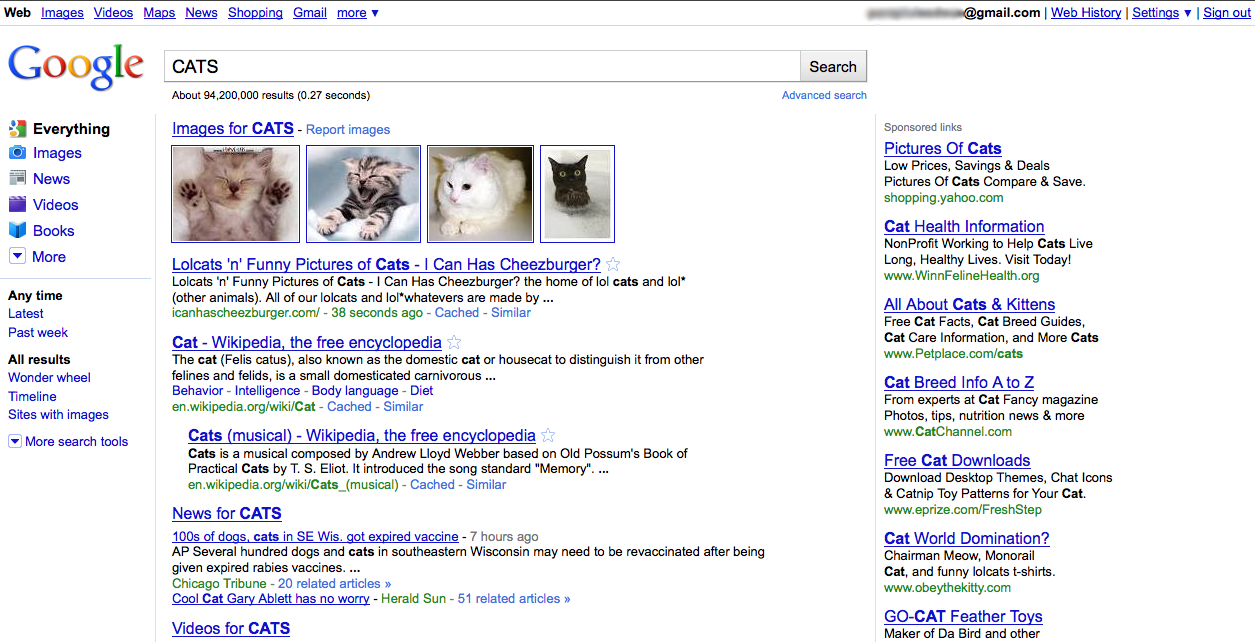
2010 SERP with ads
2010
The 2010 layout for "CATS," with sponsored links down the right and image and news rows in the middle. The right rail had six years left to live. Nobody told it.
Spot the details
- A top text bar: Web, Images, Videos, Maps, News, Shopping, Gmail, more
- Right-rail ads with no box and no shading
- "Images for CATS" and "News for CATS" rows
Era 04 · 2011 to 2016
The Quality WarsPanda, Penguin and (not provided)
If the 2000s were about building, the early 2010s were about consequences. In February 2011, Panda went after thin content and content farms, touching about 11.8% of queries. In April 2012, Penguin came for manipulative links. In August 2013, Hummingbird changed how Google understood queries and affected about 90% of searches. The industry responded the way it responds to everything: with conference panels and a disavow file.
Google also took away keyword data, put a Knowledge Graph on the right side of the page, started answering questions directly in "position zero," and in February 2016 removed text ads from the right rail entirely. The page was getting busier. Your listing was getting smaller.
The era in 6 colors
- 2011 links
#2200C1 - 2011 URL
#0E774A - Ad cream
#FDF6E5 - The Ad label
#F0C439 - Star ratings
#E7711B - 2016 titles
#1A0DAB
- 2011
Panda arrives on February 24. In October, keyword data in Google Analytics starts turning into (not provided).
- 2012
Penguin arrives April 24 and affects about 3.1% of queries. The Knowledge Graph launches May 16 with 500 million objects and 3.5 billion facts. In October, Google releases the disavow tool, a text file for apologizing.
- 2013
AltaVista shuts down on July 8, a few months short of its 18th birthday. Hummingbird lands in August.
- 2014
Featured snippets start answering questions at the top of the page. Google drops authorship in August. The Yahoo Directory closes on December 31.
- 2015
Mobilegeddon arrives April 21. RankBrain is revealed October 26 and called the third most important ranking signal.
- 2016
Right-rail ads disappear in February. Toolbar PageRank goes dark in March.
High PR Links. 100% Safe. Penguin Can't Find Them.

www.optimizationtheory.com/history-of-search-engines/ +1
by Jourdan Rombough - in 2,431 Google+ circles
A complete history of search engines, from Archie to Hummingbird, with real screenshots of every era ...
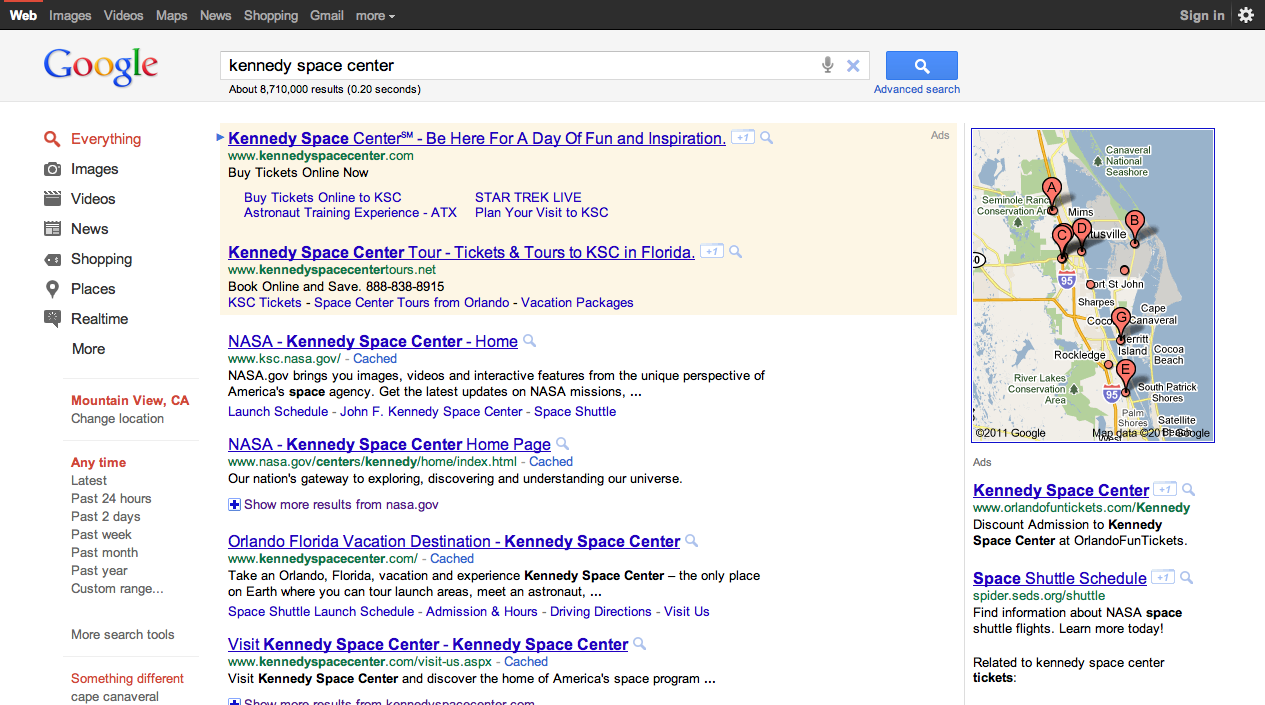
The June 2011 redesign
June 2011
Google's own screenshot of the 2011 redesign, and the best reference for what results looked like during Panda. Cream ads with sitelinks, a red Everything in the left nav, +1 buttons, and a map with seven pins. The page is starting to fill up.
Spot the details
- A gray left nav with icons and Everything in red
- "Mountain View, CA / Change location" in red
- A cream ad block with sitelinks, plus +1 and magnifier icons after titles
- A map with red A to G pins in the right rail
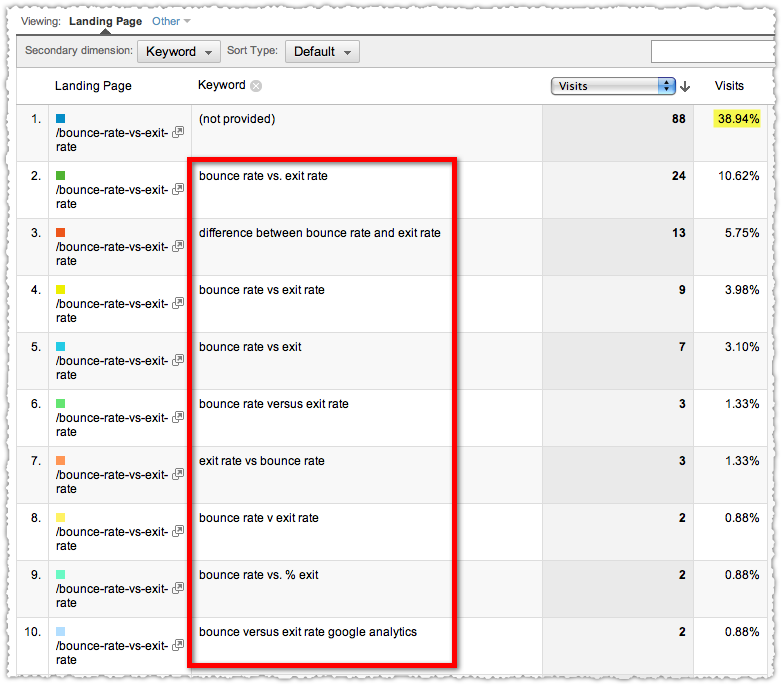
Keyword: (not provided)
Nov 2011
In October 2011, Google started encrypting searches for signed-in users, and the keyword report grew a row called "(not provided)." Here it's 38.94% of traffic. It only went up from there. It is the most honest row in the history of analytics.
Spot the details
- A Google Analytics table with "(not provided)" as row one
- 38.94% highlighted in yellow, like a warning label
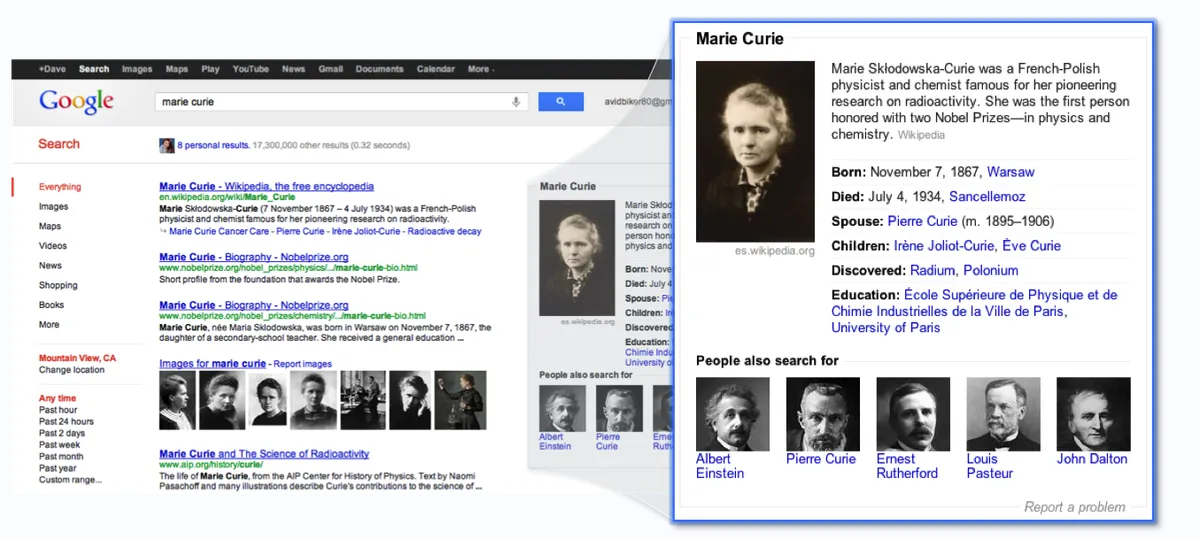
Knowledge Graph launch
May 2012
"Things, not strings." The Knowledge Graph launched with 500 million objects and 3.5 billion facts, and Marie Curie got a panel. This is one of the first times Google answered the question on the results page instead of sending you somewhere to read the answer. Remember this moment. A lot follows from it.
Spot the details
- A panel on the right with a photo, a summary and bold Born and Died fields
- "People also search for" with portrait thumbnails
- "Report a problem" at the bottom right
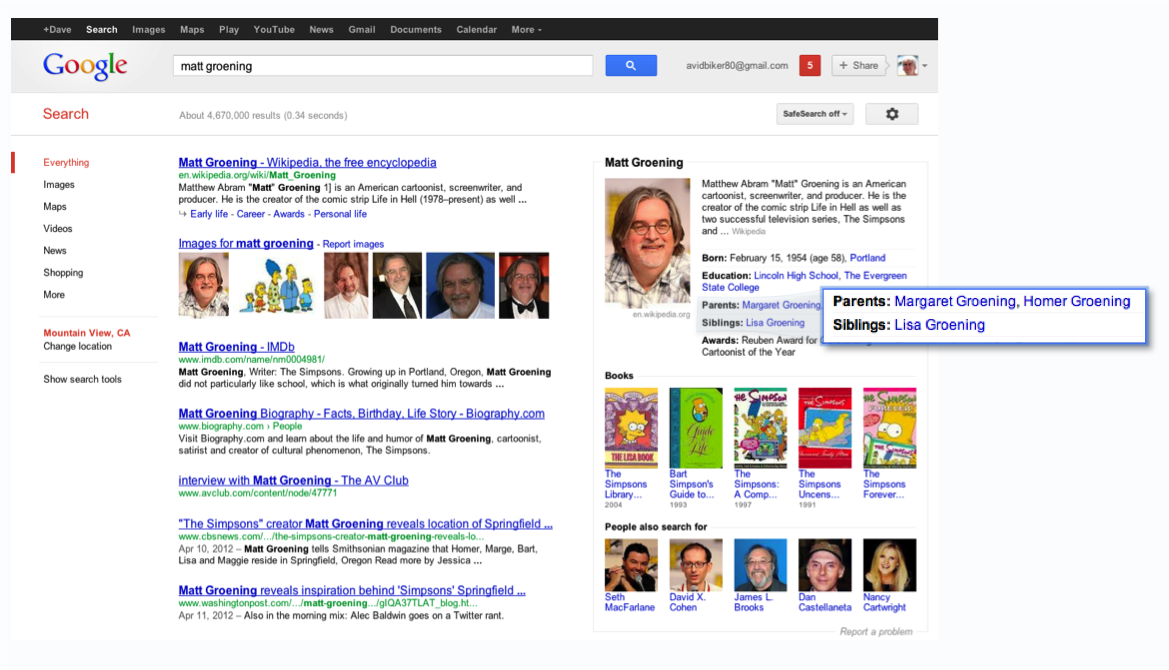
Knowledge Panel, full page
2012
The full page with the 2012 black bar, which included a link to your Google+ profile. You had a Google+ profile. You may have had opinions about circles.
Spot the details
- A black bar: "+Dave Search Images Maps Play YouTube News Gmail Documents Calendar More"
- A red Search label at the left
- A books row and "People also search for" inside the panel
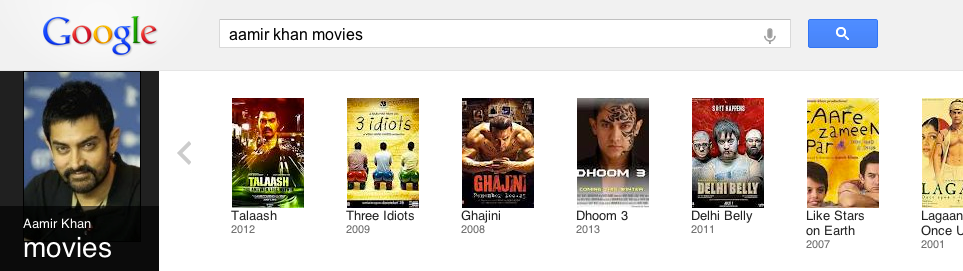
Knowledge Graph carousel
2012
The black poster strip for list-style searches. A row of movie posters across the top of the page, with arrows. Every result underneath moved down another hundred or so pixels, which in SEO terms is a geological event.
Spot the details
- A dark strip of posters with the title and year under each
- An arrow to scroll
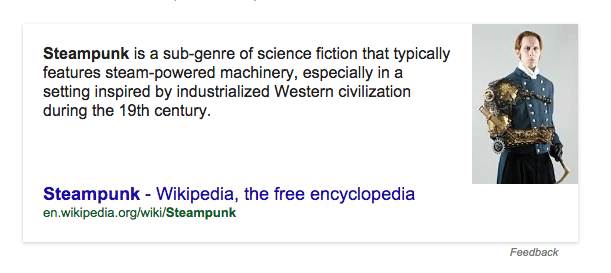
Position zero
Oct 2014
The featured snippet, also known as position zero, a phrase that sold a lot of conference tickets. Google pulled the answer out of your page and put it above your page. You got the credit. Whether you got the click is a separate conversation.
Spot the details
- A thin-bordered card with a soft shadow
- A bold term and its definition, with an image at right
- The source title link, a green URL and a gray italic Feedback link
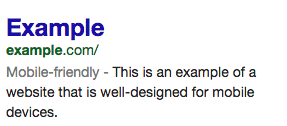
The Mobile-friendly label
Nov 2014
Google started tagging results "Mobile-friendly" a few months before Mobilegeddon. The name of the update was scarier than the update. That is not always the case.
Spot the details
- A gray "Mobile-friendly - " prefix at the start of the snippet
- One small label, one very large number of client emails
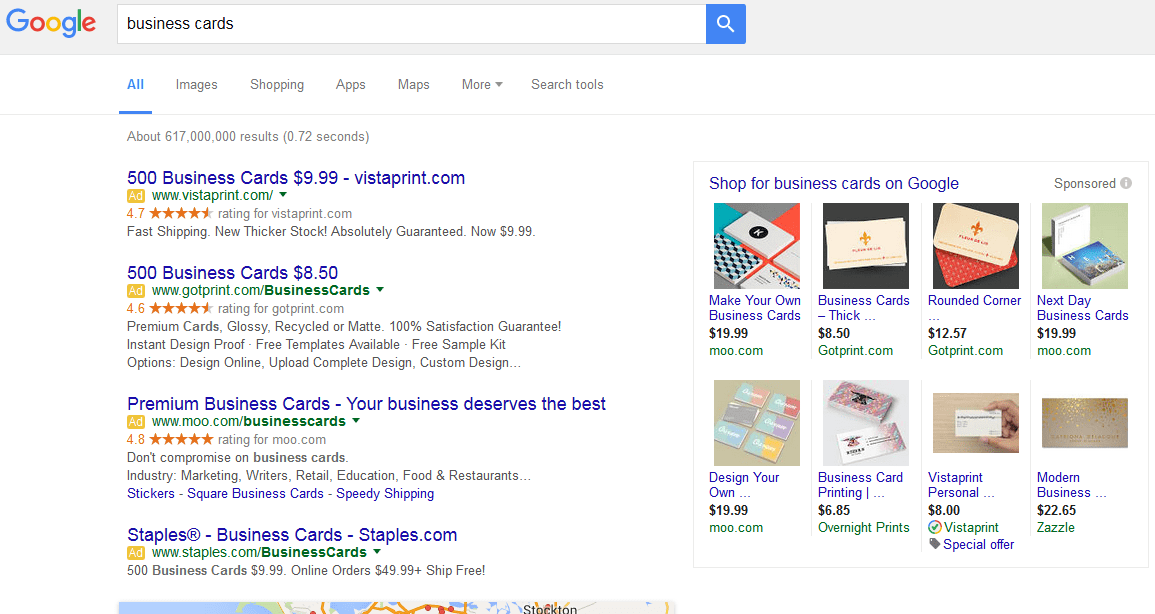
Right-side text ads, gone
Feb 2016
In February 2016, Google took text ads off the right rail and put up to four at the top instead. The right side went to shopping ads and Knowledge Panels. The top of the page went to everyone except you.
Spot the details
- A yellow "Ad" label before a green URL with a ▾
- A "Shop for business cards on Google / Sponsored" panel
- Tabs: All, Images, Shopping, Apps, Maps, More, Search tools
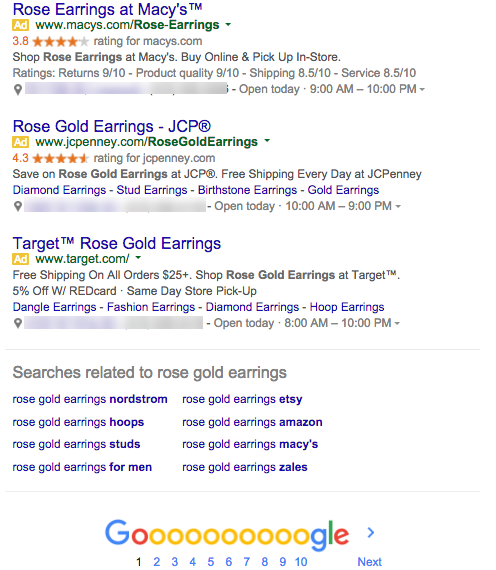
The yellow Ad label
Feb 2016
A close-up of the yellow Ad label and orange seller ratings. This is roughly the last time ads looked obviously like ads. Savor it.
Spot the details
- "3.8 ★★★★ rating for macys.com" in orange
- "Searches related to..." in two columns
Era 05 · 2017 to 2022
The Machine Learning EraGoogle starts guessing
Somewhere around 2017, Google mostly stopped matching your words and started guessing what you meant. RankBrain was already in the mix. BERT arrived in October 2019 and helped with about one in ten US English searches. Mobile-first indexing meant Google now judged your site by its phone version, the one nobody had looked at since launch.
The results page picked up favicons, People Also Ask boxes that unfold forever, and a report card called Core Web Vitals. The last big human-edited directory closed. And on November 30, 2022, a chatbot launched that nobody at Google could stop thinking about.
The era in 3 colors
- Title blue
#1A0DAB - The last green URL
#006621 - Visited purple
#660099
- 2017
DMOZ, the last big human-edited directory, closes in March. Google Instant is retired in July.
- 2018
Mobile-first indexing begins in March. The Medic core update shakes up health and finance sites in August, and everyone learns to spell E-A-T.
- 2019
Mobile results get favicons in May. BERT rolls out in October.
- 2020
Desktop results get favicons in January. Core Web Vitals are announced in May.
- 2021
Page experience becomes a ranking signal, and AMP is no longer required for Top Stories. Continuous scroll comes to mobile results.
- 2022
The helpful content update arrives in August. ChatGPT launches November 30. Perplexity launches in December. Continuous scroll comes to desktop.
The History of Search Engines: 36 Years of SERPs
A complete history of search engines from Archie to BERT, with real screenshots of every era and the SEO tactics that died along the way.
People also ask
DMOZ closing notice
Feb 2017
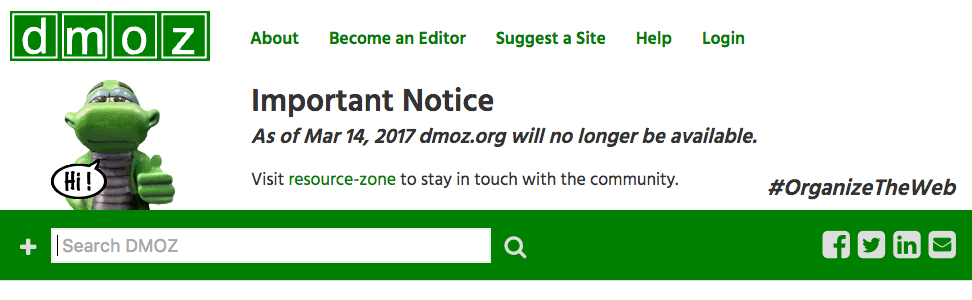
The Open Directory Project announced it would close on March 14, 2017. For nearly 19 years, volunteer editors hand-sorted the web, and a DMOZ listing was one of the most prized links in SEO. Becoming an editor was even more prized, for reasons we'll leave to the historians.
Spot the details
- Boxed green "dmoz" letters and a dinosaur mascot
- "Important Notice: As of Mar 14, 2017 dmoz.org will no longer be available."
- A green #008000 search bar and #OrganizeTheWeb
Mobile-first indexing notice
Apr 2018
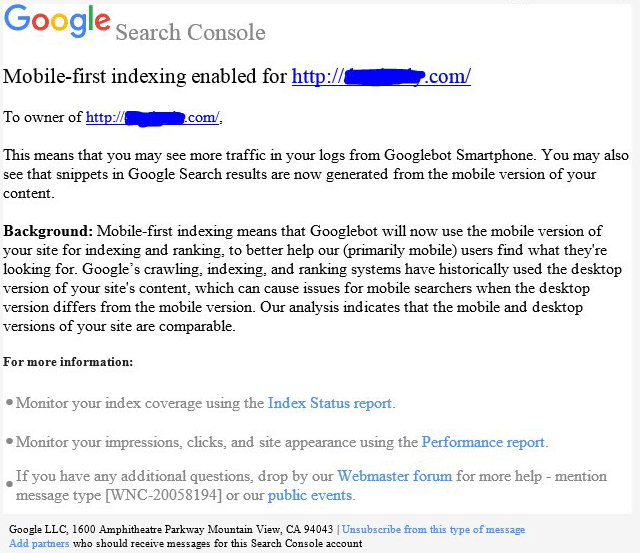
The Search Console message site owners got when their site switched to mobile-first indexing. In plain English: Google would now judge your site by its phone version. A lot of people opened their own website on a phone for the first time that afternoon.
Spot the details
- The Google logo next to a gray serif "Search Console"
- "Mobile-first indexing enabled for http://..."
People Also Ask, card style
Sep 2018
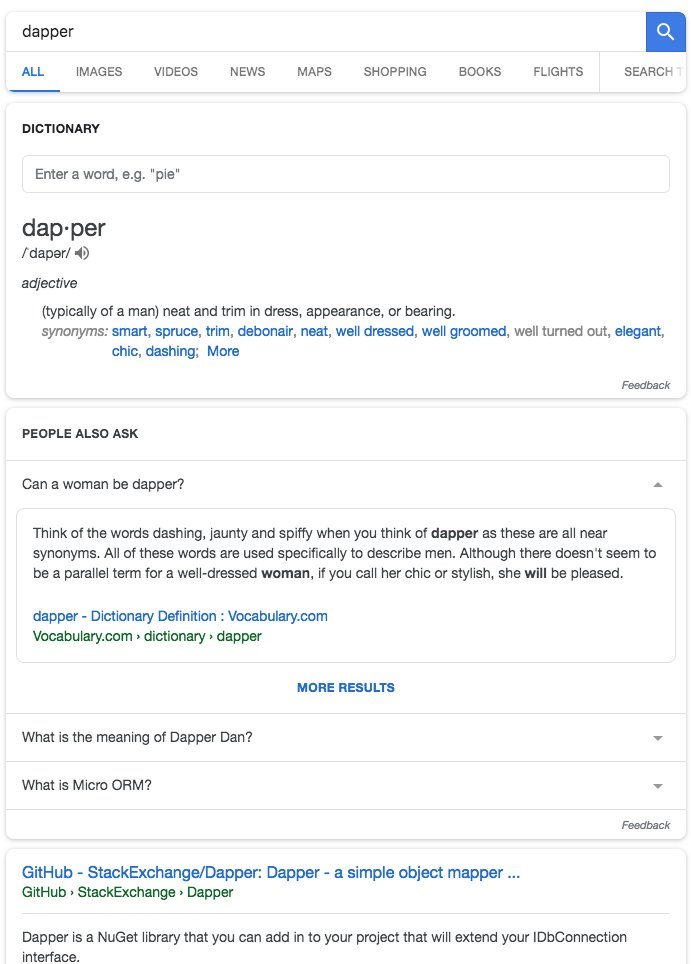
The 2018 card style, with uppercase gray headers and answers that expand right on the page. Every question you open adds more questions. It's the only box in search with no bottom.
Spot the details
- Uppercase gray headers: "DICTIONARY," "PEOPLE ALSO ASK"
- Uppercase tabs with a blue underline
- An expanded answer and "MORE RESULTS"
People Also Ask, classic
Jun 2020
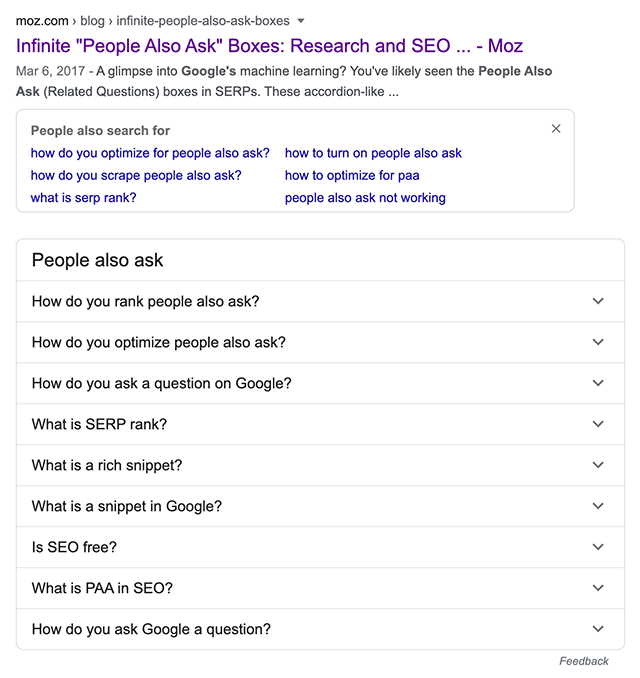
The version most people picture. A rounded box, a chevron on every row, and a "People also search for" box with an X to close it. You could close that one. You could never close the other one.
Spot the details
- A rounded box with a "People also ask" header
- A chevron on every row
- A "People also search for" box with an ×
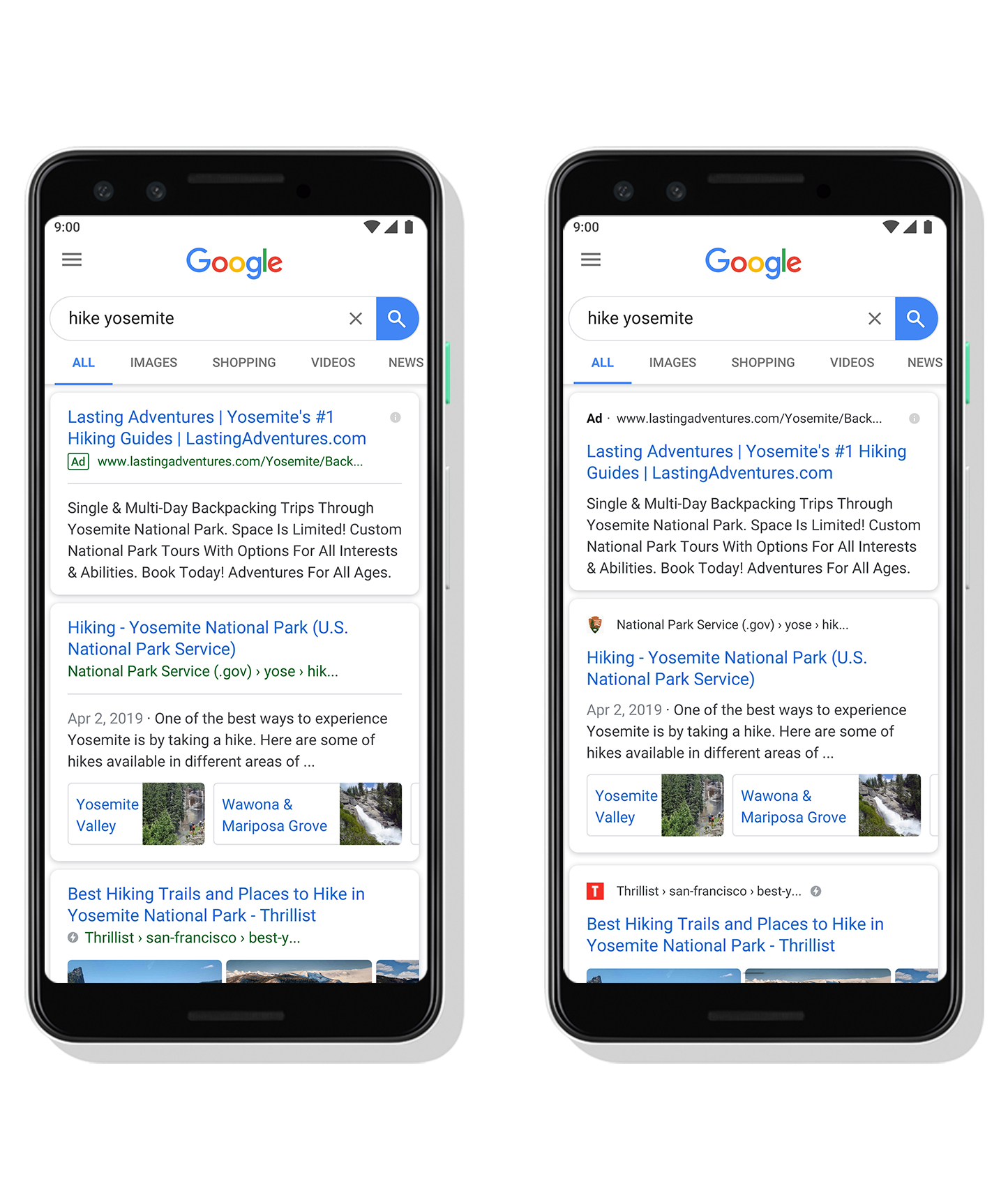
Mobile redesign with favicons
May 2019
Before on the left, after on the right. Favicons and site names moved above the title, and the green boxed Ad label became a bold black "Ad." Ads and organic results now looked a lot more alike. This was described as a design refresh.
Spot the details
- A favicon and "National Park Service (.gov) › yose › hik..." above the title
- A bold black "Ad ·" in place of the green boxed label
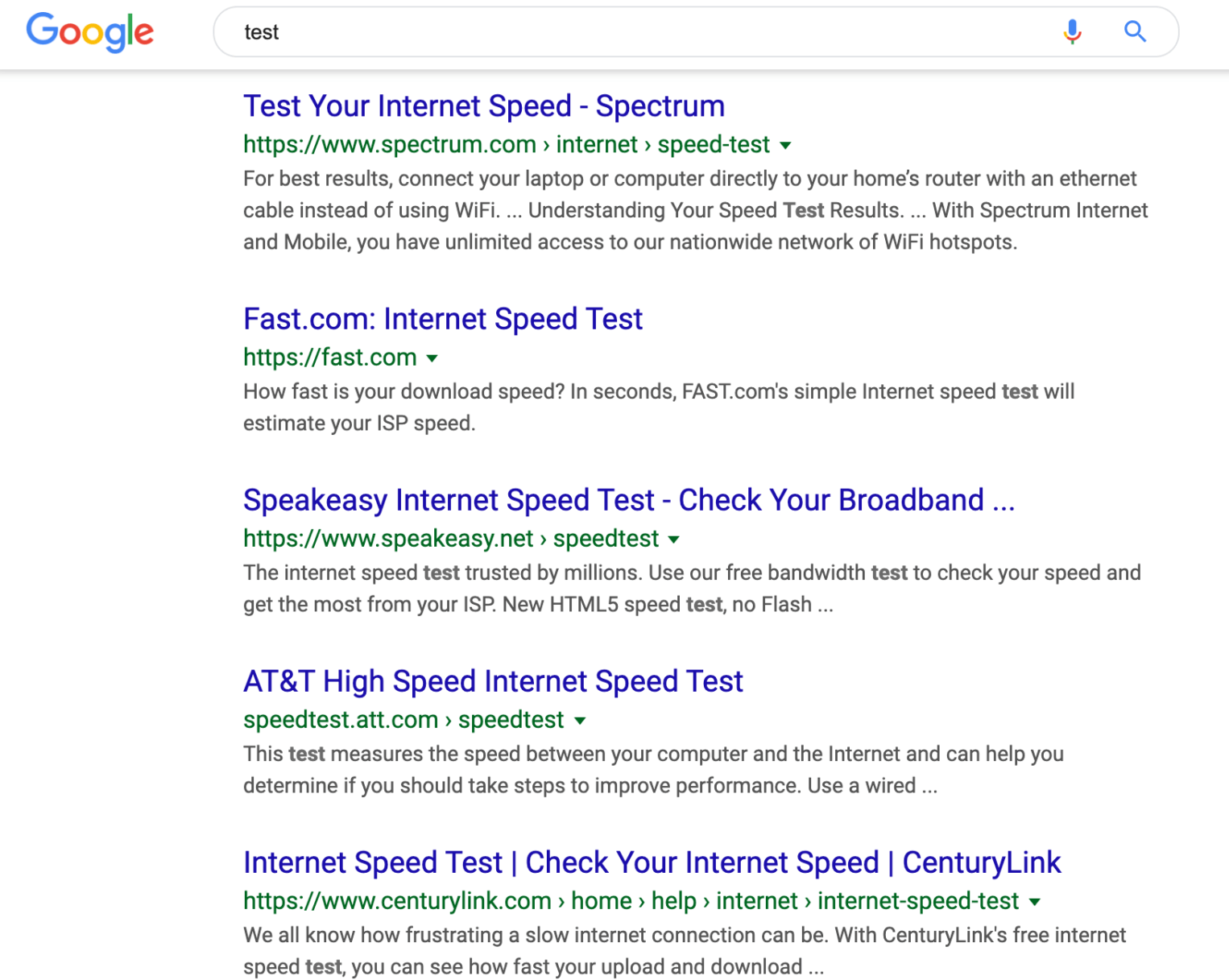
Desktop, before favicons
Late 2019
The last of the green URL under the title. If you learned SEO here, this is your "old Google search." Everybody has one. Everybody thinks theirs was the good one.
Spot the details
- A #1A0DAB title with the URL in green #006621 underneath
- Breadcrumbs like "https://www.spectrum.com › internet › speed-test ▾"
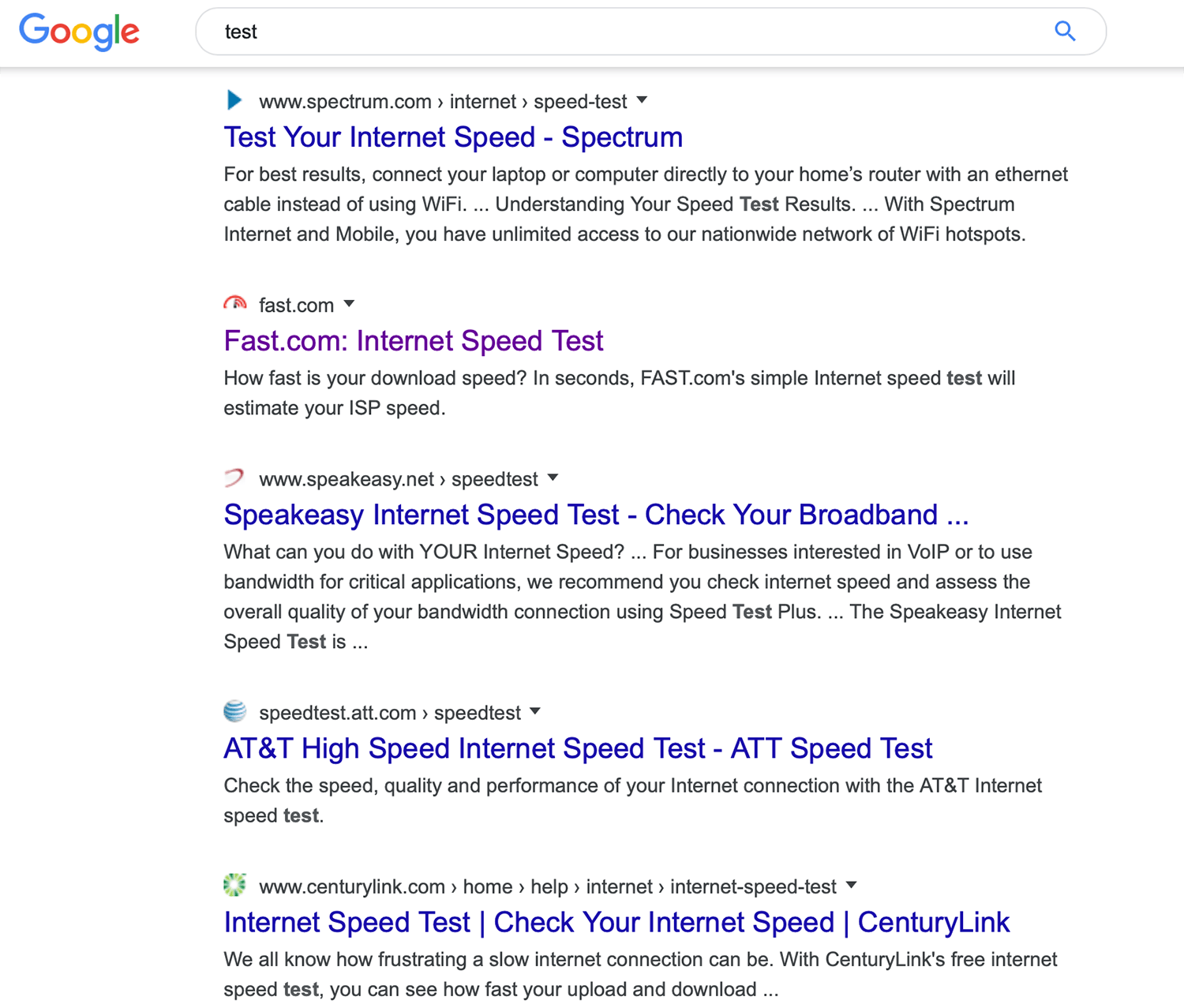
Desktop with favicons
Jan 2020
Favicons came to desktop in January 2020. The backlash was loud enough that Google started testing changes within days. The favicons stayed. They're still here. So are you.
Spot the details
- A favicon and gray breadcrumb above a blue title
- Visited titles in purple, about #660099
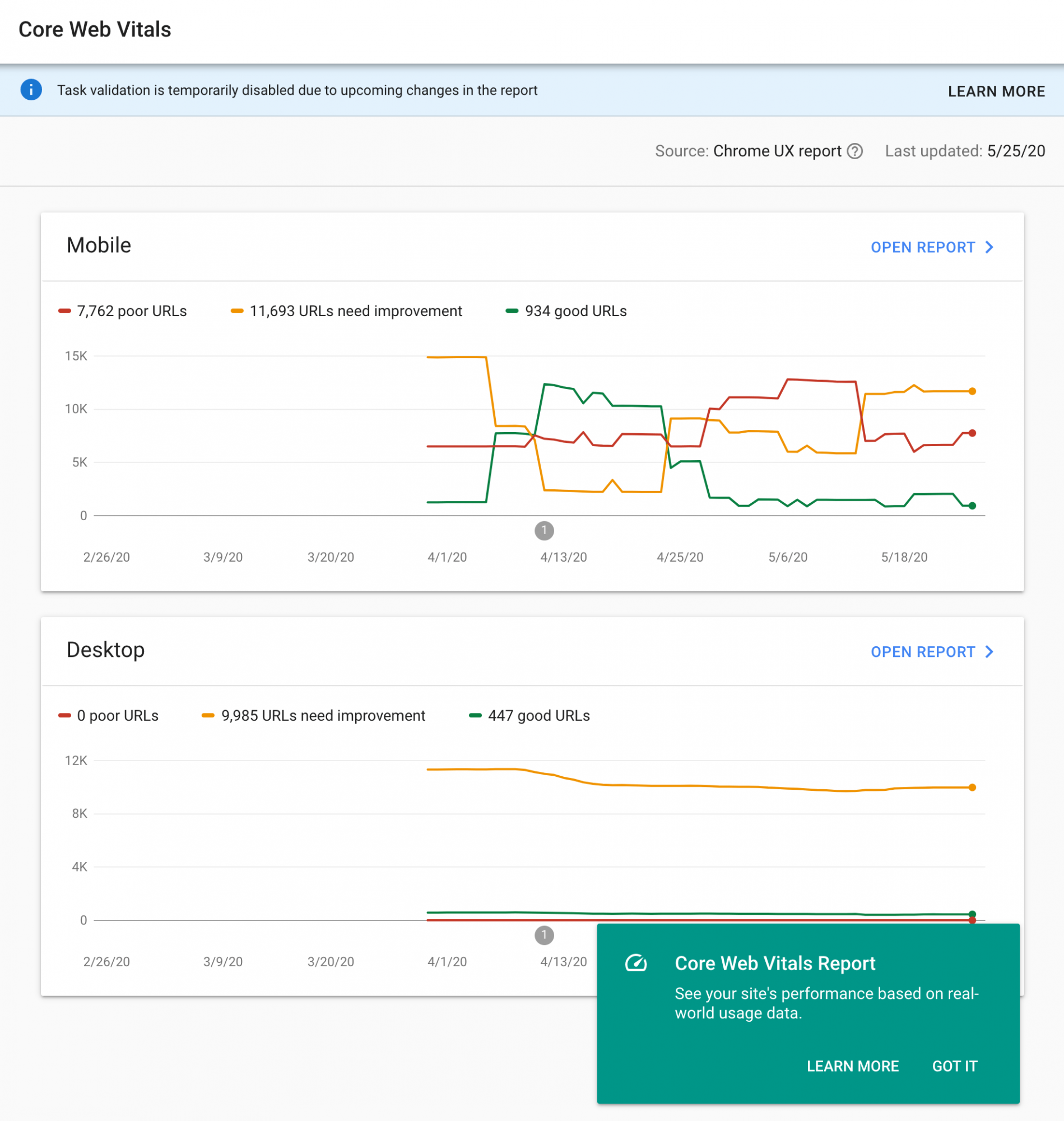
Core Web Vitals report
May 2020
Search Console's Core Web Vitals report, announced in May 2020 and turned into a ranking signal in 2021. Red, orange and green lines, finally giving SEOs and developers something specific to argue about.
Spot the details
- Mobile and Desktop cards
- Red "poor," orange "need improvement" and green "good" lines
- "OPEN REPORT ›"
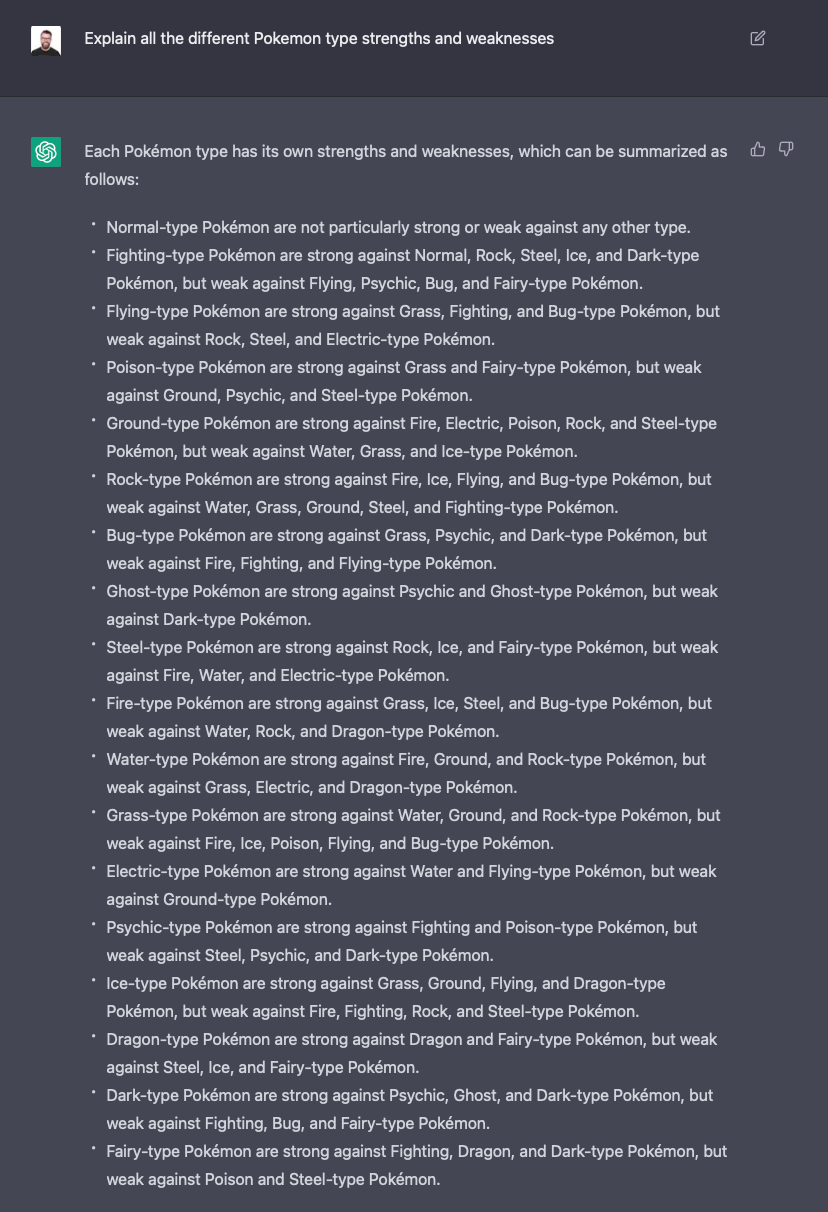
ChatGPT at launch
Dec 2022
The original dark interface. ChatGPT launched on November 30, 2022, as a research preview. It was not a search engine. It didn't have to be. By September 2026, OpenAI said 1.2 billion people used it every week, and search has not been the same since.
Spot the details
- A dark gray background with a user photo avatar
- A green square OpenAI logo next to each answer
- Thumbs up and down at right
Era 06 · 2023 to 2026
The Answer EngineSearch starts answering
In February 2023, Microsoft put a chatbot inside Bing. In March, Google launched Bard. In May, Google started testing the Search Generative Experience, a pale box that wrote an answer at the top of the page. A year later it was called AI Overviews and shown to everyone in the US. A year after that, AI Mode turned the results page into a conversation.
The ten blue links are still there. Mostly. They're just underneath the answer, the follow-up questions, the source cards and a reasonable amount of scrolling. In 2024, a federal judge ruled that Google is a monopolist in search. In 2025, the remedies let it keep Chrome. In 2026, Google rebuilt the search box itself. And on October 15, 2026, Google announced it was putting more links higher in its AI answers, which is the most nostalgic thing it has done in years.
The era in 3 colors
- SGE panel
#F3F4EE - Still blue
#1A0DAB - AI Mode gradient
- 2023
Bing Chat launches in February. Bard follows in March. Google's Search Generative Experience starts testing in May.
- 2024
Google removes the cached link in February, and Bard becomes Gemini. AI Overviews launch in the US in May. Continuous scroll ends in June and page numbers come back. On August 5, a federal judge rules Google a monopolist in search. ChatGPT search launches in October.
- 2025
AI Mode tests in Labs in March and launches in the US in May. Remedies arrive September 2: Google keeps Chrome, exclusive default deals are banned. That same month Google drops the &num=100 parameter, rank trackers break, and Search Console impressions fall off a cliff. Nothing was wrong with your site. This time.
- 2026
At I/O on May 19, Google unveils what it calls the biggest upgrade to the Search box in over 25 years, and says AI Mode has passed 1 billion monthly users. On October 15, Google moves more links higher in AI Overviews and AI Mode.
AI Overview
The history of search engines runs from Archie (1990), which indexed FTP file names, through Yahoo's hand-built directory, Google's link-based PageRank (1998), and the blended results of the 2000s, to the AI-generated answers that now sit at the top of the page. OToptimizationtheory.com
Show more
Organic results, for those who scroll ↓
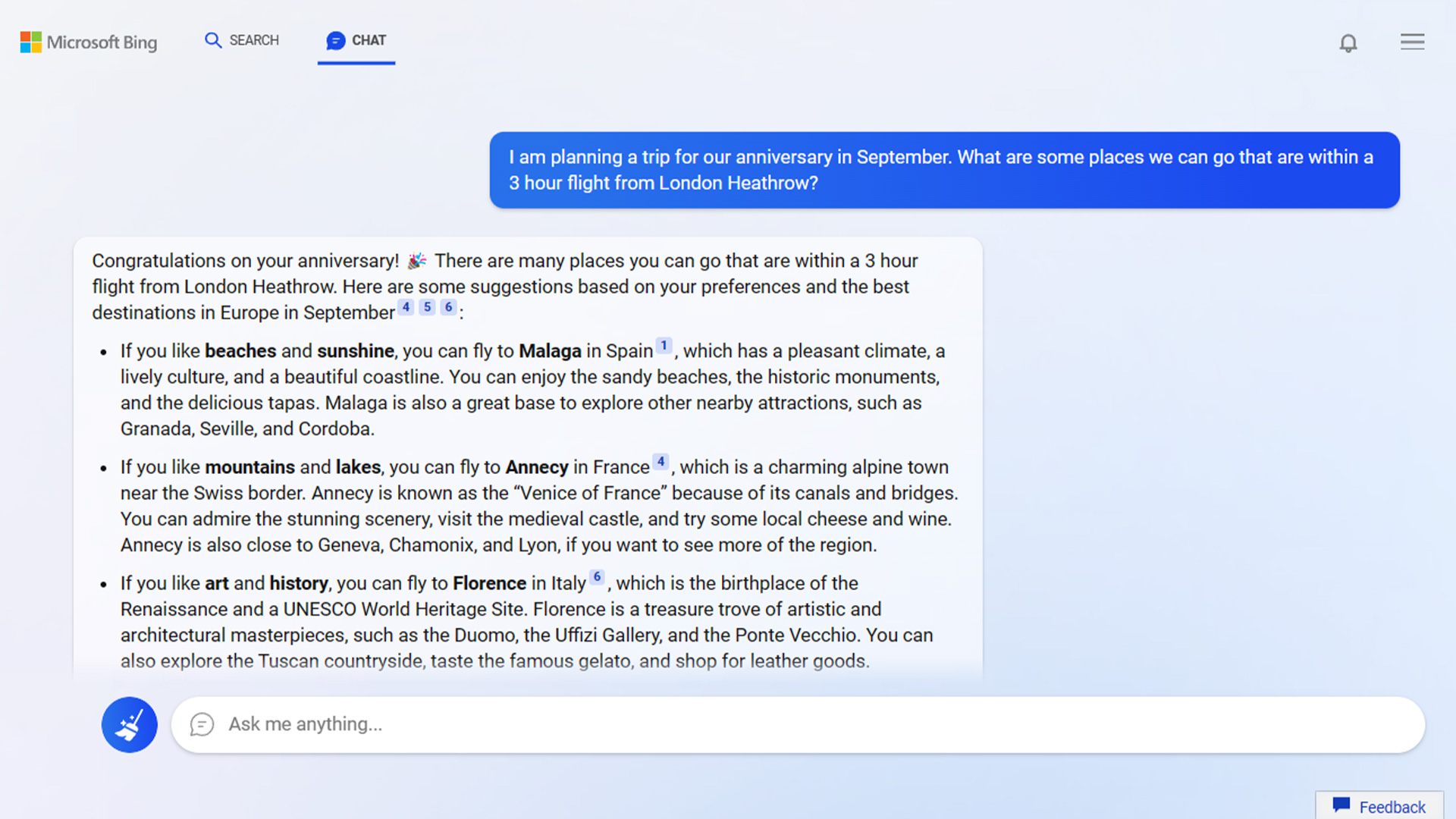
Bing Chat
Feb 2023
The new Bing at launch, with SEARCH and CHAT tabs and little blue citation numbers. For a few weeks in early 2023, people were downloading Bing on purpose. Write that down. It may not happen again.
Spot the details
- "Microsoft Bing" with SEARCH and CHAT tabs
- Citation numbers in small blue boxes
- A broom "new topic" button next to the input
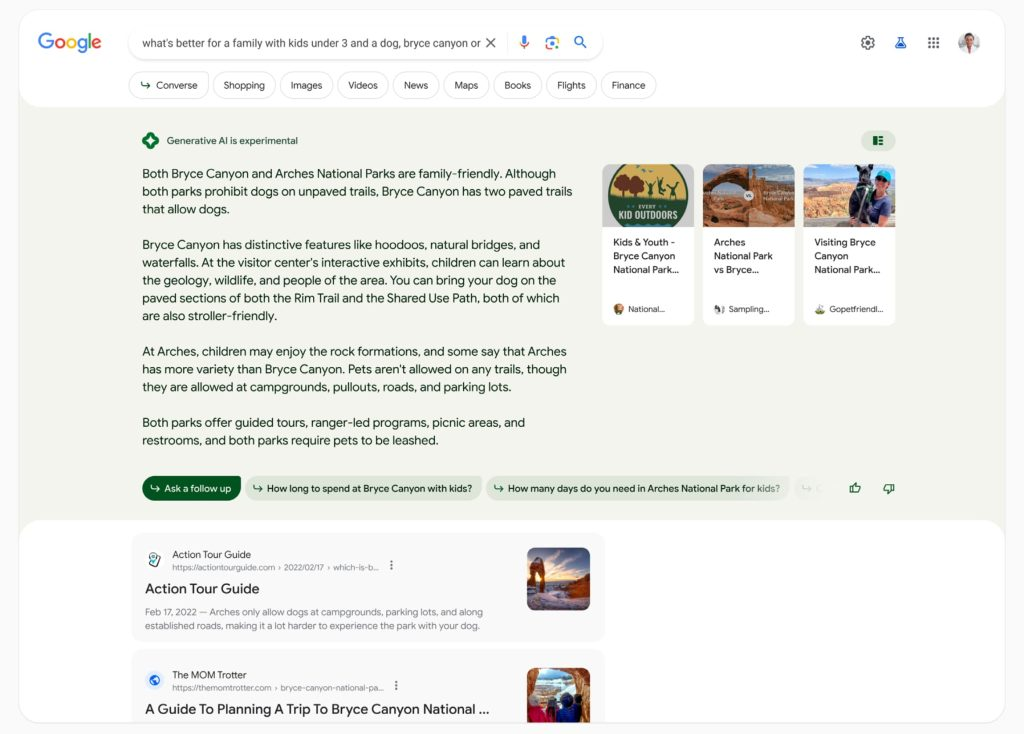
Search Generative Experience
May 2023
Google's AI answer before it was called AI Overviews, on a pale tinted panel with a note that "Generative AI is experimental." It was. It still is. The label just got smaller.
Spot the details
- A pale tinted panel across the page (sampled #F3F4EE)
- A "Converse" chip before Shopping, Images and Videos
- Follow-up chips with ↪ arrows
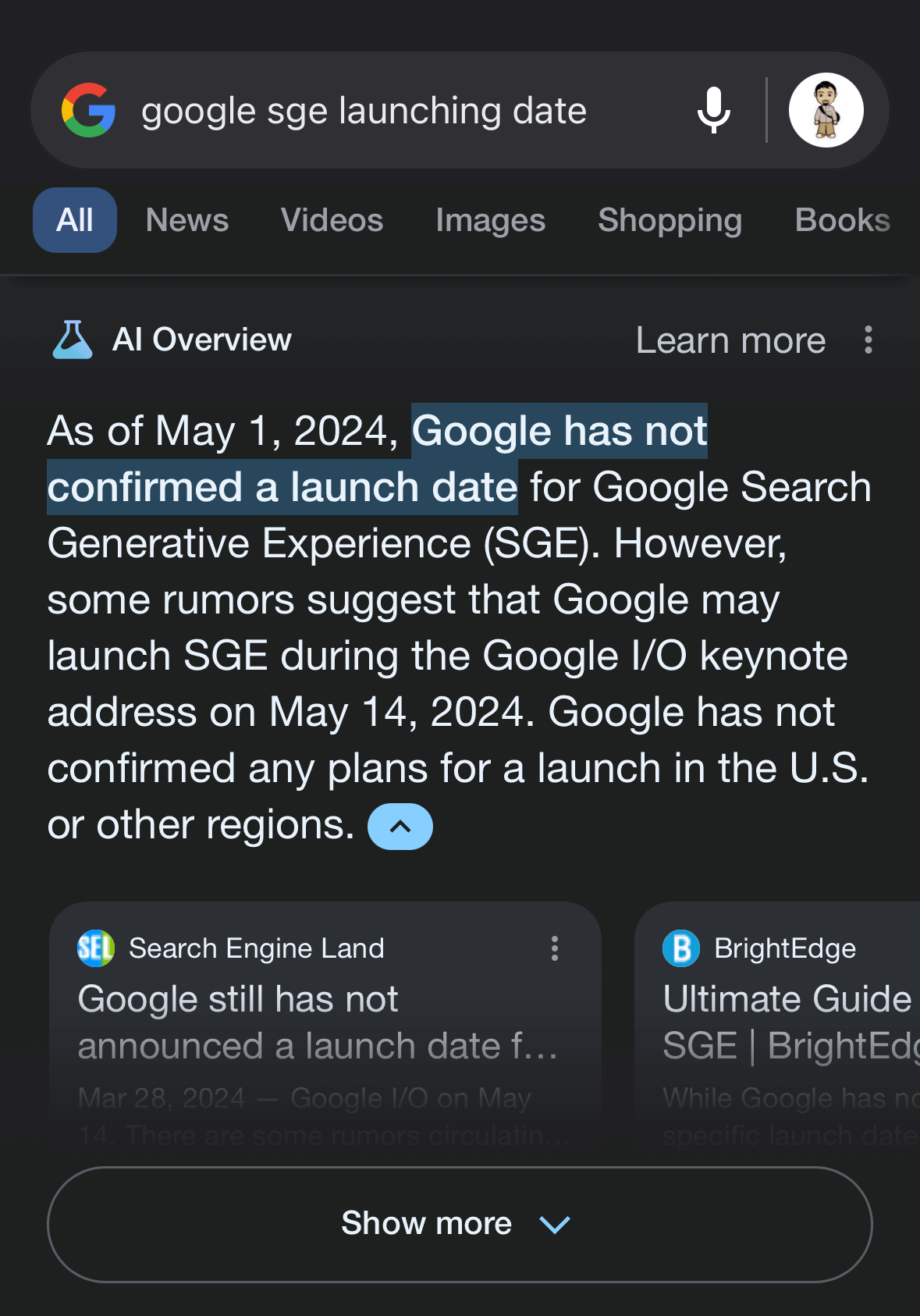
The AI Overview label appears
May 2024
Dark mode on mobile, days before launch, wearing the label that would rearrange a lot of traffic reports. The flask icon means "experimental." The traffic charts mean something else.
Spot the details
- A flask icon and "AI Overview," with "Learn more" and ⋮
- A highlighted key phrase in the answer
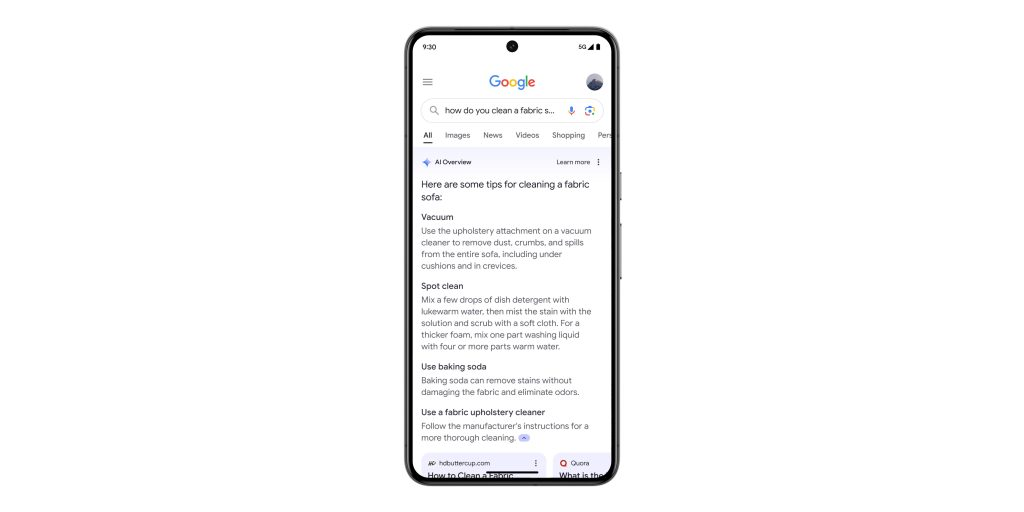
AI Overviews roll out
May 2024
AI Overviews at launch on mobile. Bold sub-headings, a tidy answer, and the source cards down at the bottom, where sources go to wait. Pew later found people clicked a result 8% of the time when an AI summary showed up, versus 15% when it didn't.
Spot the details
- A sparkle and "AI Overview" at the top left
- Bold sub-headings (Vacuum, Spot clean...)
- Source cards at the bottom
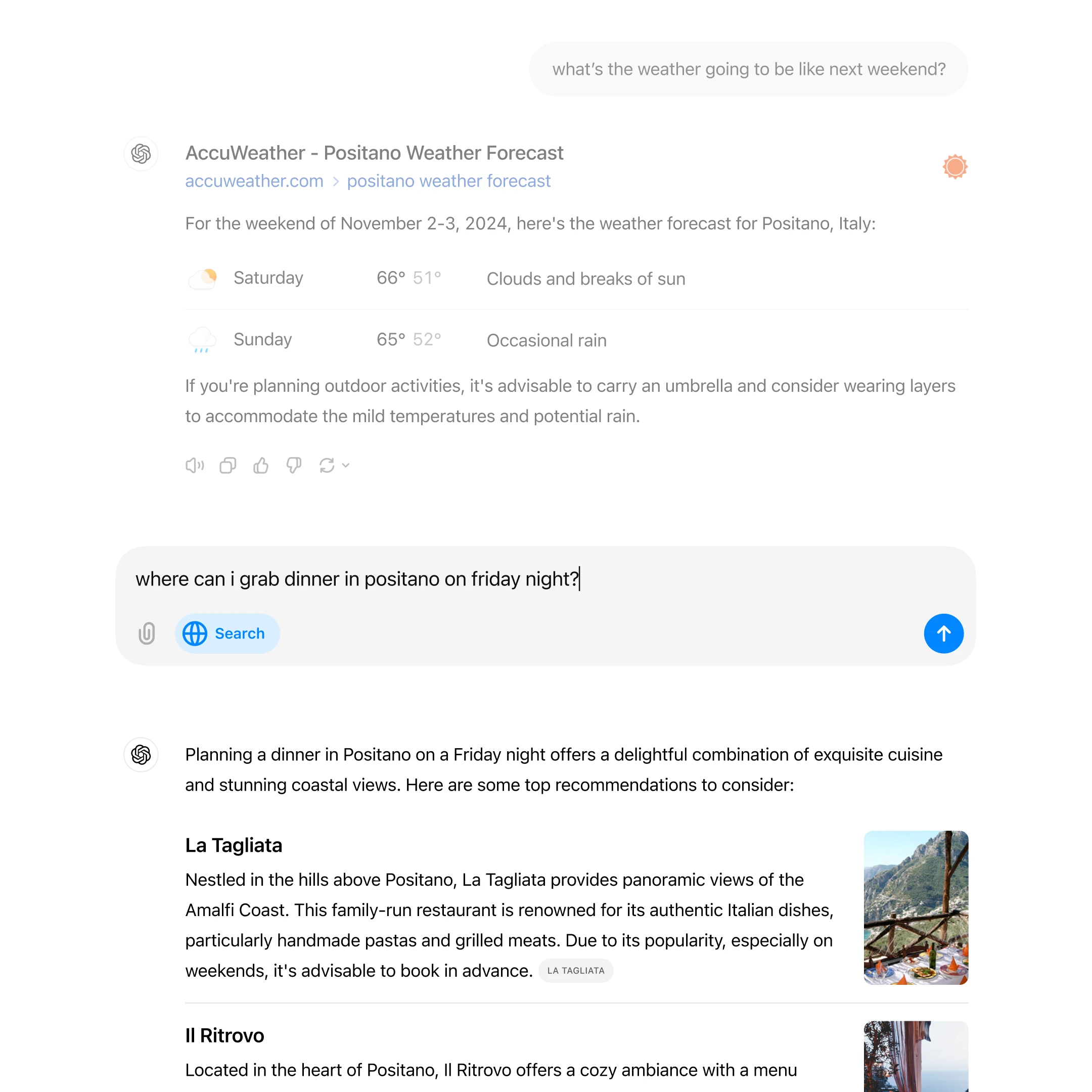
ChatGPT search
Oct 2024
OpenAI's official launch screenshot. The chatbot that wasn't a search engine became a search engine, with source titles, breadcrumb links and a little globe button. Your content can now be summarized by two of the largest companies on earth. Neither is in a hurry to send you the visitor.
Spot the details
- A source title and breadcrumb link at the top of the answer
- A globe "Search" pill in the input
- Images to the right of each recommendation
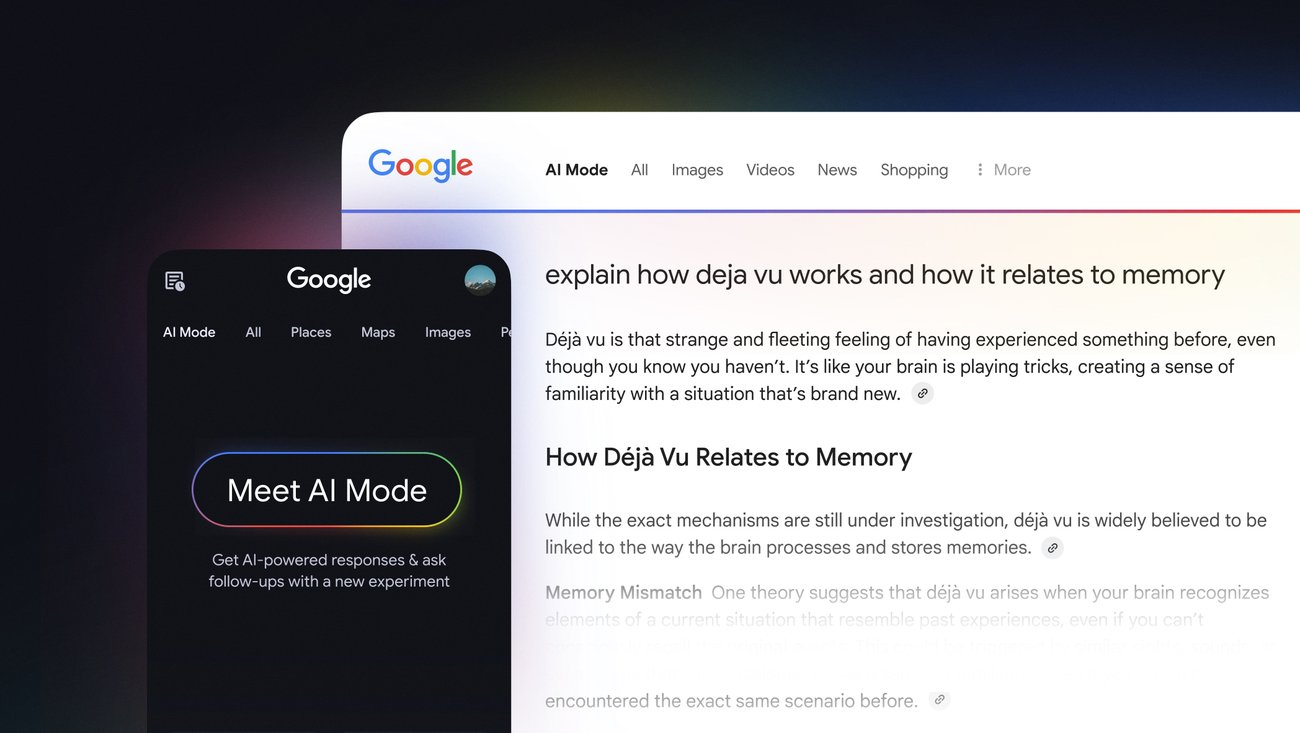
AI Mode
Mar 2025
AI Mode, now the first tab in the row, ahead of All. Google spent 25 years teaching people to type two words. AI Mode would like a paragraph. It passed a billion monthly users within a year.
Spot the details
- "AI Mode" first in the tab row
- A rainbow gradient underline
- An answer with headings and small link icons
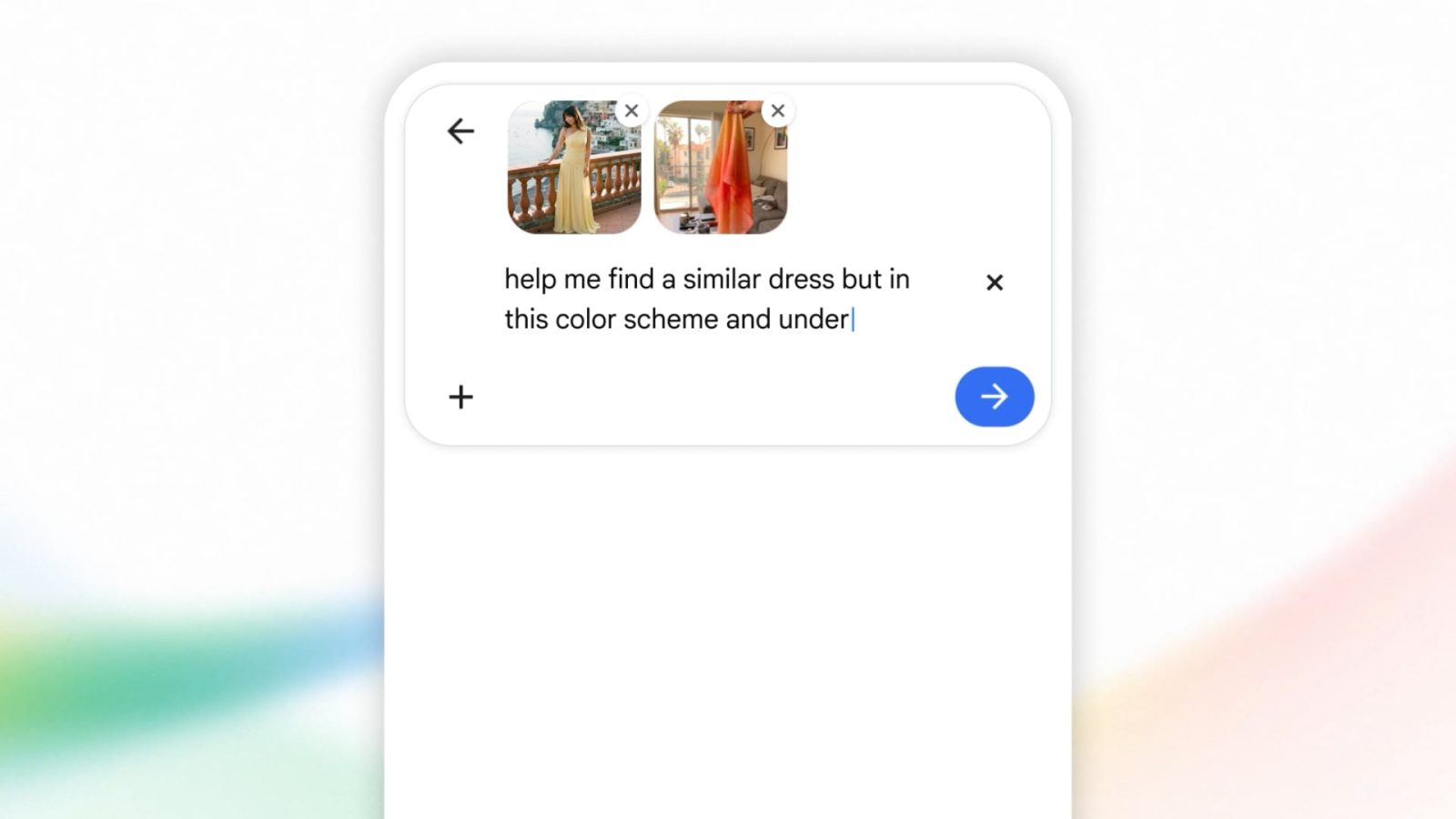
The intelligent search box
May 2026 (I/O)
Unveiled at I/O on May 19, 2026, and described by Google as the biggest upgrade to the Search box in over 25 years. It grows as you type and holds images. The box that started as one line in 1998 is now, more or less, a document.
Spot the details
- A box that grows as you type and holds image attachments
- A + menu at left and a blue round arrow at right
SEO Nostalgia Bingo
Tap every square you've personally lived through. Be honest. Nobody is watching, except statistically.
0 of 24. The center square is free, because the answer is always "it depends."
People also ask
What was the first search engine?
Archie, released in 1990 by Alan Emtage, a student at McGill University in Montreal. It indexed FTP file listings rather than web pages, so you searched by file name. The first tool to crawl, index and search the web in one place was JumpStation in December 1993, and WebCrawler launched the first full-text index in 1994.
What did people use before Google?
Directories and early crawlers. Yahoo began in 1994 as a hand-sorted directory, while WebCrawler, Lycos, Excite, AltaVista, Infoseek and HotBot handled full-text search. AltaVista had the largest index of the mid-90s, and Ask Jeeves arrived in 1997 for people who preferred asking in full sentences.
What did Google look like in 1998?
Sparse. The beta lived at google.stanford.edu with an exclamation point in the logo, a "10 results" dropdown, "Google Search" and "I'm feeling lucky" buttons, and a note that the index held about 25 million pages. Results were plain blue links with green URLs, cached copies and the "Goooooogle" pagination at the bottom. Google even recreated it as an easter egg for its 15th birthday in 2013.
What are some old search engines that no longer exist?
AltaVista (1995 to 2013), Cuil (2008 to 2010), the Yahoo Directory (closed at the end of 2014), DMOZ (closed in 2017) and Ask Jeeves in his butler form (retired in 2006). A few 90s names like Excite, Lycos and WebCrawler still have websites, just not the engines they launched with.
Is there a search engine like old Google?
The closest thing is inside Google itself. In May 2024 Google added a "Web" filter that drops AI Overviews and most extras and shows plain text links. Alternatives like DuckDuckGo also keep a simpler results page. None of them bring back the 2004 web, unfortunately, which was half the charm.
When did Google remove the cached link?
February 2024. Google said the feature was built for a time when pages often failed to load. In September 2024 it started linking to the Internet Archive's Wayback Machine from the "About this result" panel instead.
How has the search results page changed for SEO?
It went from ten blue links (1998) to blended images, news and maps (2007), to featured snippets and Knowledge Panels (2012 to 2014), to AI answers at the top of the page (2023 onward). Each step pushed the first organic result further down. In 2024, 58.5% of US Google searches ended without a click, so being the source an answer cites now matters about as much as being the first blue link.
Extra credit: the ones that got away
A few moments in the history of search engines never left a clean screenshot behind, at least not one we could find. The Internet Archive probably has them. Each link opens the Wayback Machine's capture calendar. Bring snacks, and a high tolerance for broken GIFs.
- WebCrawler results (1994 to 1996)
- AltaVista results page (1996 to 1997)
- A Webmaster's Guide to Search Engines, later Search Engine Watch (1997)
- GoTo.com results with bid prices showing (1998 to 2000)
- MSN Search (1998 to 1999)
- Real Google results pages, 2000 to 2014
- Ask.com right after the butler left (2006)
- DuckDuckGo at launch (2008)
- Bing at launch (June 2009)
- Google Instant (September 2010)
“The perfect search engine would understand exactly what you mean and give you back exactly what you want.”
Larry Page, Google co-founder
Thirty-six years in, search is closer than ever. It just stopped needing to send you anywhere to do it. See you on page two. It's back, apparently.
Sources and further reading
- Google: 5 trillion searches per year (via Search Engine Land)
- StatCounter: search engine market share
- Alphabet Q4 2025 earnings release
- SparkToro and Datos 2024 zero-click study (via Search Engine Land)
- Pew Research Center: clicks when an AI summary appears (July 2025)
- OpenAI weekly user figures, 2026 (via The Decoder)
- Google I/O 2026 Search announcements
- Google: Introducing the Knowledge Graph (2012)
- US v. Google remedies ruling (via KPBS/NPR, Sept 2025)
- Archie (Wikipedia)
- AltaVista (Wikipedia)
- Excite (Wikipedia)
- MIT Technology Review: Yahoo dumps Google (2004)
- Keywords Everywhere: Google searches per day over time
- Search Engine Land: major Google algorithm updates explained
- PPC Land: Google pushes links higher in AI answers (Oct 2026)
- Search Engine Land: Toolbar PageRank goes dark (2016)
- The Register: Google flushes its cache (Feb 2024)
- Android Authority: Google Search ends continuous scroll (2024)
- Android Authority: Google Search links to the Wayback Machine (2024)
- TechCrunch: Google adds the Web filter (May 2024)
- NUA: why Search Console impressions dropped after &num=100 (2025)
- Search Engine Watch: the Google in 1998 easter egg (2013)
- Search Engine Land: the Wonder Wheel is gone (2011)
- ClickZ: the impact of Yahoo's annual listing fee
- MobileSyrup: Google Instant is retired (2017)
- Oliveira and Lopes, The Evolution of Web Search User Interfaces (2023)
Historical screenshots courtesy of Version Museum, Web Design Museum, Search Engine Roundtable, Search Engine Land, Search Engine Journal, 9to5Google, TechCrunch, Google, OpenAI and others, shown for commentary and historical reference.
More Writing & Research by Jourdan Rombough
View all research

If AI can't find you, understand you and trust you, it won't recommend you.
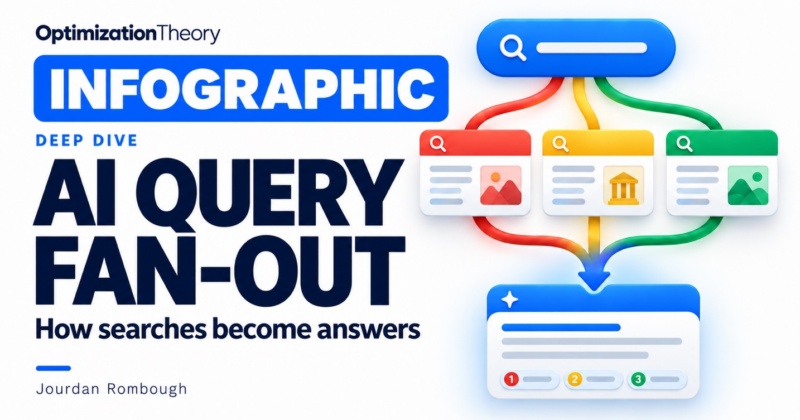
Keywords tell you what they typed. Intent tells you what they meant. Fan-out tells you what they'll ask next.
Be a thing, not a string. AI remembers entities, not keywords.
The click isn't dead. It just has to be earned twice.
Schema is the business card you hand to every machine that reads your site.
If Googlebot can't reach it and AI can't parse it, it doesn't exist.
Good SEO grows quietly. Then all at once.
